11 Natural Hairstyles for Men With Barber Chair Phrases and Upkeep

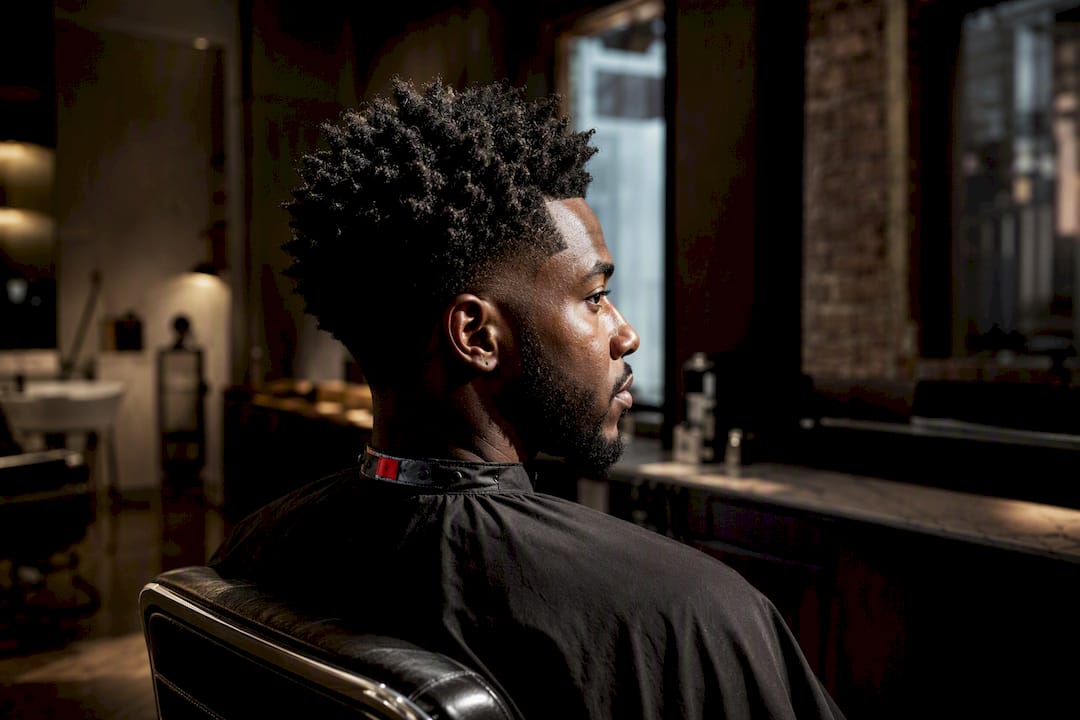
Embrace your curl or coil pattern instead of fighting it, then back it with a moisture-first routine. That combination, not a specific style, is what makes a cut look intentional rather than accidental. A dry scissor shape, the LOC method, and a jojoba-based leave-in handle most of the work. Manhattan Barbershop builds every natural cut around that same logic.
TL;DR:
Use a moisture-first routine with water, oil, and cream layers to keep hair hydrated and avoid dryness or breakage.
Choose styles based on curl type and density, with protective options like locs or twists for low maintenance and display styles like afro or high-top for shows.
Follow a structured wash day with gentle shampoo, conditioner, and deep conditioning, adjusting frequency based on hair texture to preserve health.
Communicate clearly with your barber by specifying natural cuts that preserve curl pattern, proper length, and shading to prevent unwanted thinning or uneven shapes.
Address dryness, buildup, or damage quickly by adjusting moisture strategies, avoiding excess manipulation, and consulting a dermatologist when scalp issues persist.
Table of Contents
Popular Natural Hairstyles for Men and Who They Fit
Natural hairstyles for men fall into two camps: display styles that show off the curl pattern, and protective styles that tuck it away to reduce daily stress on the strands. Knowing which camp a style belongs to matters more than the name of the style itself.
Afro — Fits 3B to 4C hair with medium to high density. Maintenance is moderate: pick out every day or two, moisturize daily. Chair phrase: “round it into a soft dome, dry cut for shape.”
Twist-out — Works on 3A to 4B curls looking for definition without daily heat. High styling effort, low cutting maintenance. This is a temporary style, not a haircut request.
Two-strand twists — Best on 3C to 4C hair. Protective, lasts 1 to 3 weeks with proper care. Chair phrase: “leave enough length up top for twisting, taper the sides.”
Starter locs — Suited to 4A to 4C density. Very low daily manipulation once established, but the first 3 to 6 months need consistent retwisting.
High-top fade — A display style for 3B to 4C hair with good density on top. Chair phrase: “high skin fade, keep the top full and rounded.”
Textured crop — Works well on 3A to 3C waves and loose curls. Low maintenance, dry-cut on top, short taper on the sides.
Wash-and-go waves — Ideal for 3A to 3B hair with natural wave pattern. Minimal styling, just product and air-dry.
Buzz cut with texture — Fits any curl type, especially men who want zero styling time. Chair phrase: “even guard length, let the texture show through.”
Sponge curls — Common on shorter 4A to 4C hair that needs defined curls without twisting. Daily or every-other-day upkeep.
Curly quiff — Suited to 3A to 3C hair with enough length on top to push back. Moderate upkeep, some product needed daily.
Low-cut fade with natural top — Versatile across 3B to 4C textures. Chair phrase: “low fade, natural texture up top, no thinning shears.”
Protective styles like twists and locs buy you time between salon visits. Display styles like the afro and high-top need more daily attention but show off the pattern itself.
How Do You Choose a Natural Hairstyle for Your Hair Type?
Curl categories run from 3A (loose, springy curls) to 4C (tight coils with the most shrinkage). Shrinkage is the gap between your hair’s stretched length and its resting length, and on 4C hair that gap can be dramatic. A barber guide to hair texture types breaks down each category if you’re not sure where you land.
Density matters as much as curl type. Thick, dense hair can carry more height and volume on top. Thin or lower-density hair usually looks better with a tighter shape and a fade doing the visual work instead of length.
A few rules keep the guesswork out of the decision:
If your face is round, favor height on top and a lower fade to elongate the look.
If your face is long or narrow, keep more width and less vertical height.
Choose a fade when density is uneven or thinning at the temples, since it hides the transition.
Prioritize protective styles (twists, locs) if you’re rebuilding damaged ends or growing out heat damage.
Estimate your shrinkage by comparing a wet, stretched strand to how short it looks once fully dry.
The Wash-Day Routine That Keeps Natural Hair Healthy
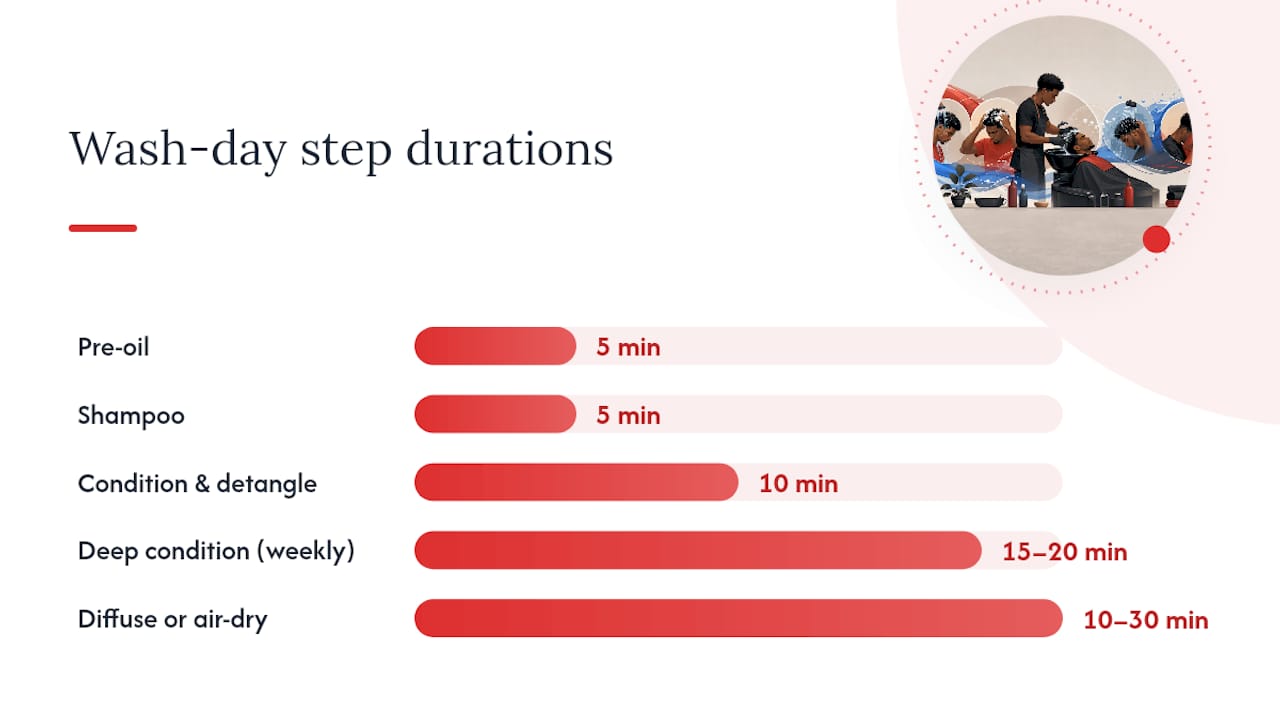
A structured wash day protects moisture better than a random rinse-and-go, and it doesn’t have to eat your whole Saturday.
Pre-oil the hair (5 minutes) — Apply a light oil to dry hair before washing to buffer against stripping.
Shampoo gently (5 minutes) — Focus on the scalp; shampoo’s job is cleaning skin, not stripping strands.
Condition and detangle (10 minutes) — Work conditioner through with fingers or a wide-tooth comb, since conditioner protects and hydrates even short hair.
Deep condition (15 to 20 minutes) — Add heat or a plastic cap once a week or every other week.
Apply leave-in cream (2 minutes) — This is your main moisture layer while hair is still damp.
Seal with oil (2 minutes) — Lock in that moisture with a light oil like jojoba.
Diffuse or air-dry (10 to 30 minutes) — Diffusing on low heat speeds things up without disrupting curl pattern.
Wash frequency depends on texture. Tighter coils generally hold up fine washing every 7 to 10 days, while looser waves may need it 3 to 4 times a week. Co-washing (conditioner only, no shampoo) between full washes keeps moisture up without over-cleansing.
The LOC or LCO method layers Liquid (water or leave-in), Oil, and Cream, in that order, or swaps the last two for LCO if you need more slip for detangling. Water does the actual moisturizing; oil and cream just seal it in.
Pro Tip: Spritz your hair with plain water before applying any product on non-wash days. Dry product on dry hair does almost nothing for moisture.
Styling Moves and Products That Respect Your Texture
Finger-coiling and twist-outs build definition without heat, and both work better on damp hair than dry. Sponge curling is faster for shorter styles and gives a uniform curl pattern in a few minutes. Diffusing on low heat with a curl cream locks in shape while cutting drying time roughly in half compared to air-drying alone.
Stick to these product categories:
Leave-in cream for daily moisture and detangling.
Curl cream or light gel for definition without stiffness.
A sealing oil like jojoba or a light coconut oil to lock in water.
Look for aloe and glycerin as humectants that pull moisture into the strand.
Avoid sulfates and drying alcohols, which strip natural oils faster than they replace them.
Skip daily heat styling and excessive re-touching. Both break down the curl pattern over time and force you back into the repair cycle you’re trying to avoid.
What Should You Tell Your Barber for a Natural Cut?
Walking in without a plan is how most men end up with a cut that doesn’t match their texture. Bring reference photos, state how often you’ll actually come back for maintenance, and mention your daily routine so the barber cuts for the shape you’ll wear most days, not just the day of the appointment.
Use language that removes ambiguity:
“Dry scissor shape on top” tells the barber to cut with the curl pattern already showing, not stretched wet.
“Rounded crown, low taper” sets both the top shape and how the sides blend.
“No thinning shears on tight coils” prevents the frizz and uneven shrinkage that shears cause on 4A to 4C hair.
“Leave 1.5 to 2 inches on top for this shape” locks in enough length for styles like twist-outs or afros.
Ask directly how many weeks the shape holds before you’ll need a fade or blend touch-up.
A barber who understands hair texture will ask these questions before you do.
Fixing Dryness, Breakage, and Buildup Fast
Dryness feels rough and dull even right after moisturizing. Protein overload feels stiff and straw-like. Buildup leaves hair looking flat and greasy despite regular washing. Each one needs a different fix, not the same routine repeated harder.
Dryness: switch to LCO order for more slip, and moisturize with water first, not just product.
Protein overload: skip protein treatments for a few weeks and focus on moisture-only conditioners.
Buildup: run a clarifying wash, then rebuild with a deep conditioner the same day.
Breakage from styling tension: loosen twists or braids and reduce how often you manipulate the hair.
Consistent moisture and lower manipulation tend to show measurable improvement within 6 to 8 weeks. Curly and coily hair is structurally more prone to dryness because oil travels slower down tighter coils, so patience matters more than switching products every week. See a dermatologist if shedding is sudden or the scalp shows persistent redness or flaking that home care doesn’t clear up.
A Barber’s Take on Cutting for Curl, Not Against It
The best consultations start with the same question: what does this hair do on its own, before any product touches it? Preserving that natural pattern, then shaping a cut that holds between visits, beats forcing a style the texture fights every morning.
— Evgenii
Ready for a Cut That Works With Your Texture?
Most guides stop at product advice, but some barbershops start with the cut itself, shaping fades, tapers, and natural-top styles that hold their form for weeks instead of days. An experienced barber who understands curl pattern and density will spend real time consulting before cutting, helping clients achieve consistent shape requests across visits.

If you’re ready to see what a texture-aware cut looks like on your hair, the free model haircut page is a low-pressure way to start. For everyone else, book an appointment online and mention the style you’re after, whether that’s a high-top fade, a low-maintenance taper, or something closer to a full afro. Pair the fresh cut with a set of minimalist eyewear if you’re rounding out the whole look.
Sources
Recommended
Comments