Hair Texture Types Barber Guide for Men in 2026

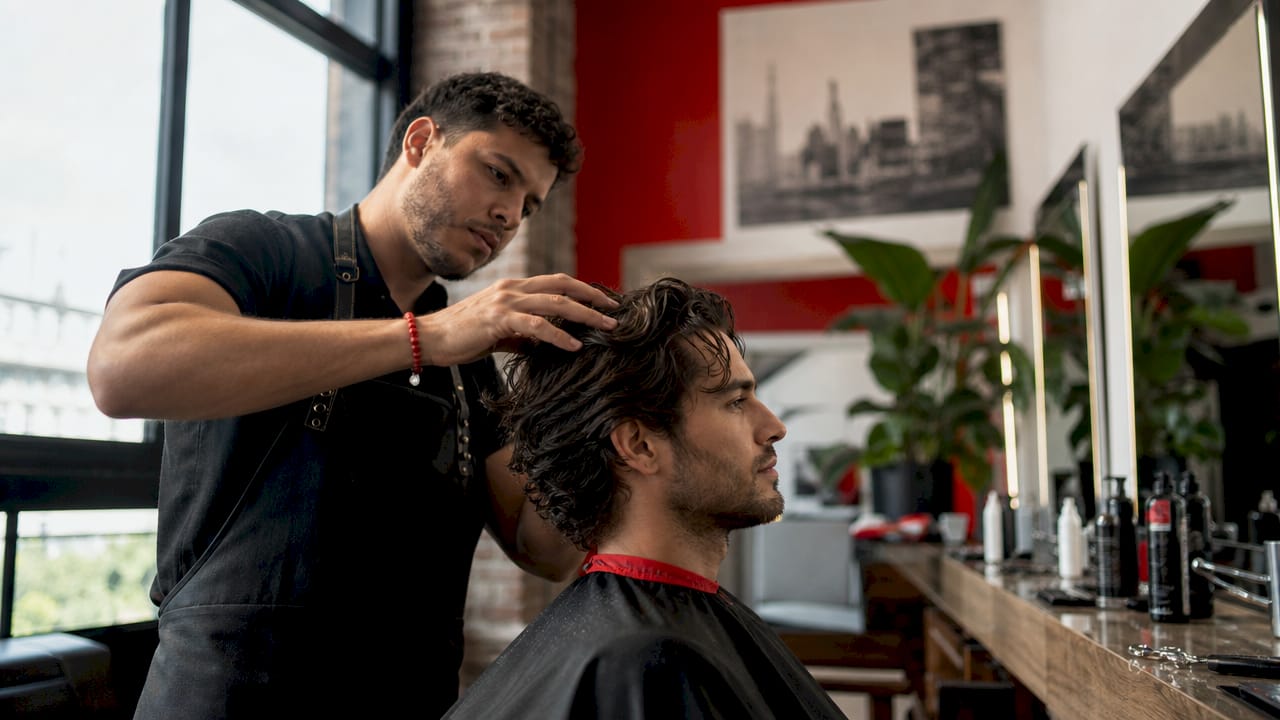
Hair texture types in barbering refer to the categorized curl patterns and strand thicknesses that determine the best haircutting methods and care routines. The standard industry classification, popularized by stylist Andre Walker, divides hair into four types: straight (Type 1), wavy (Type 2), curly (Type 3), and coily (Type 4), each with subtypes A through C reflecting tightness. Understanding this hair texture types barber guide is the difference between a cut that holds for three weeks and one that falls apart in three days. Knowing your type before you walk into a barbershop gives your barber the information needed to choose the right tools, techniques, and products for your specific hair.
1. What are the four main hair texture types?
Hair is categorized into four types based on curl pattern, with subtypes that reflect how tight or loose that pattern runs. Each type behaves differently when cut, dried, and styled.
Type 1 (Straight): Subtypes 1A through 1C range from pin-straight and fine to straight but thick and coarse. Straight hair lies flat, reflects light easily, and tends to get oily faster than other types. It holds fades and tapers well but can look limp without the right cut weight.
Type 2 (Wavy): Subtypes 2A through 2C range from a loose S-wave to a defined, frizz-prone wave. Wavy hair sits between straight and curly, making it versatile but unpredictable. It responds well to textured crops and disconnected undercuts.
Type 3 (Curly): Subtypes 3A through 3C produce spiral curls ranging from loose ringlets to tight corkscrews. Type 3 hair shrinks about 25–50% when dry, which means a barber cutting it wet will almost always cut too short. Moisture retention is the primary care challenge.
Type 4 (Coily/Afro-textured): Subtypes 4A through 4C produce the tightest curl patterns, from soft coils to a zigzag pattern with almost no defined curl. Type 4 hair can shrink 50–75% when dry. It is also the most fragile type, prone to breakage under tension or aggressive tools.
Pro Tip: Take a photo of your hair after it air-dries with no product. That image shows your true curl pattern and is the single most useful thing you can bring to a barber consultation.
Hair density, meaning how many strands grow per square inch of scalp, adds another layer to this picture. A man can have Type 3C curls with low density or Type 1B straight hair with extremely high density. Both factors together determine the final cut strategy.
2. How strand thickness and density change the cut
Hair type and hair texture are distinct concepts that work together. Curl pattern tells a barber the shape of the hair. Strand thickness tells them how much weight and resistance they are working with.
Strand Type | Characteristics | Shear Size | Best Techniques |
Fine | Lightweight, low resistance, prone to limpness | Point cutting, minimal layering | |
Medium | Balanced weight and hold, most forgiving | 5.75–6.0" convex or semi-convex | Scissor-over-comb, blunt cuts |
Coarse | Heavy, high resistance, holds shape well | 6.0–6.5" larger shears | Slide cutting, fades, tapers |
Fine hair needs lightweight styling products and shorter cuts that add the illusion of volume. Coarse hair benefits from medium to heavy products, and fades or tapers manage bulk without making the style look heavy. A barber who ignores strand thickness will often over-remove weight from fine hair or under-remove it from coarse hair.
Density compounds these decisions further. High-density hair of any strand type requires more passes and longer shears to achieve even coverage. Low-density hair needs careful weight distribution so the scalp does not show through the style.
Pro Tip: Ask your barber to assess your strand thickness by pulling a single hair between two fingers. Fine hair is barely felt. Coarse hair has clear resistance. This 10-second test changes the entire cutting plan.
3. Why dry cutting is the right call for curly and coily hair
Dry cutting is the preferred method for curly and coily hair because shrinkage can reduce apparent length by 30–75% when hair is wet. A barber who cuts Type 3 or Type 4 hair while it is wet is essentially guessing at the final length.
Dry cutting methods used by skilled barbers include:
Curl-by-curl shaping: The barber cuts individual curl clusters at their natural resting position, preserving the curl’s shape rather than disrupting it.
Dusting: A light trim that removes only split ends and flyaways without taking off visible length. This is the go-to maintenance cut for coily hair.
Scissor-over-comb on dry hair: Used for Type 2 and lighter Type 3 hair to blend and shape without flattening the wave pattern.
Barbers consider dry cutting essential for textured hair because it respects shrinkage and delivers precision that reflects the hair’s true length and shape. Wet cutting on coily hair is one of the most common reasons men leave a barbershop unhappy.
The tool matters as much as the method. Convex blade edges glide through textured hair cleanly, while micro-serrated blades grip and pull. For dense coily hair, longer shears of 6.5 inches provide better blade coverage across wide sections.
4. How to identify your hair texture type before booking
Identifying your hair texture type takes about five minutes and requires no special tools. Observing your natural drying pattern, curl shape, strand feel, and scalp visibility together gives you a complete hair profile.
Wash and air-dry without product. This reveals your true curl pattern. Any product will alter the result.
Check the curl shape. No curl means Type 1. A loose S-wave means Type 2. A defined spiral means Type 3. A tight coil or zigzag means Type 4.
Feel a single strand. If you can barely feel it, your strands are fine. If it feels like thread, it is medium. If it feels like wire, it is coarse.
Look at your scalp through your hair. If you can see scalp easily, your density is low. If you cannot see scalp at all, your density is high.
Photograph the result. A photo from the front, side, and back gives your barber a reference point before the cut begins.
Sharing this information with your barber is as useful as bringing a photo of a desired style. Knowing how to communicate your hair texture clearly saves time and prevents misunderstandings. Mention past cuts that worked, past cuts that did not, and any products you currently use.
Hair types can shift slightly with hormones, damage, and stress, so reassess your type every year or after any major health change.
5. Barber tools and techniques matched to each texture
Blade profiles must match both hair density and texture to produce a clean cut without damaging the hair fiber. Using the wrong blade on the wrong texture creates frizz, split ends, and uneven shape.
Hair Type | Recommended Blade | Shear Length | Cutting Technique |
Straight (Type 1) | 5.5–6.0" | Blunt cut, scissor-over-comb | |
Wavy (Type 2) | Semi-convex | 5.75–6.0" | Point cutting, slide cutting |
Curly (Type 3) | Polished convex | 6.0–6.5" | Dry curl-by-curl, dusting |
Coily (Type 4) | Polished convex | 6.5" | Dry cutting, dusting, afro shaping |
Key techniques by texture:
Point cutting removes weight from straight and wavy hair without creating a blunt, heavy line.
Slide cutting thins coarse straight hair by gliding the shear along the strand rather than cutting across it.
Scissor-over-comb blends fades on all hair types but requires dry execution on curly and coily hair.
Dusting is the safest maintenance technique for Type 4 hair, removing damage without visible length loss.
Heavy thinning or texturizing tools are contraindicated for textured hair because they disrupt natural curl clusters and cause frizz. A barber who reaches for a thinning shear on Type 3 or Type 4 hair is working against the hair’s natural structure.
Pro Tip: Before your cut, ask your barber which blade profile they plan to use on your hair. A barber who can answer that question confidently is one who understands your texture.
Proper tension also matters. Pulling textured hair taut before cutting distorts the curl and leads to uneven results once the hair springs back. Skilled barbers cut textured hair with minimal tension, letting the curl sit naturally.
Key takeaways
Knowing your curl pattern, strand thickness, and density before visiting a barber is the single most effective way to get a cut that holds its shape and suits your hair.
Point | Details |
Four hair types exist | Types 1–4 cover straight to coily, each with A–C subtypes reflecting pattern tightness. |
Shrinkage changes everything | Type 4 hair shrinks 50–75% when dry, making dry cutting the only accurate method for coily hair. |
Strand thickness drives tool choice | Fine hair needs 5.25–5.75" convex shears; coarse hair needs 6.0–6.5" heavier shears. |
Blade profile must match texture | Convex edges suit curly and coily hair; micro-serrated bevels suit straight hair. |
Self-assessment takes five minutes | Wash, air-dry, observe curl shape, feel a strand, and check scalp visibility for a full hair profile. |
What I have learned cutting every hair texture
A barber’s honest take on texture knowledge
The biggest mistake I see men make is walking into a barbershop without any idea of their hair type and expecting the barber to figure it out in 30 seconds. A good barber will assess your hair. A great barber will ask you questions. But the consultation goes much faster and the result is much better when you already know whether you are a 3B with medium density or a 4A with fine strands.
The second thing I have noticed is that men with textured hair often accept bad cuts because they assume their hair is “difficult.” It is not difficult. It requires a barber who understands shrinkage, uses the right blade, and does not reach for a thinning shear out of habit. When clients at Manhattanbarbershopny come in with Type 3 or Type 4 hair, the first thing we do is assess the dry curl pattern before any water touches it. That single step changes the entire cut.
Maintenance is the other half of the equation. Men with coily hair who wash every 2–3 days and condition from mid-shaft to ends retain moisture far better than those who wash daily and skip conditioner. The cut holds longer when the hair is healthy between visits. For barber-recommended product choices by texture, the guidance is consistent: lightweight products for fine hair, heavier creams and butters for coily hair.
The best investment you can make in your hair is finding a barber who specializes in your texture type and then learning enough about your own hair to have a real conversation with them. That combination produces results that a random walk-in never will.
— Evgenii
Manhattanbarbershopny: cuts built around your texture
Every man’s hair tells a different story, and the barbers at Manhattanbarbershopny read that story before picking up a single tool. Whether you have fine straight hair that needs weight and structure or dense coily hair that requires dry cutting and a convex blade, the team on the Upper East Side has the skills to match.

Eugene Solod built Manhattanbarbershopny around one principle: the cut should work with your hair, not against it. From clean fades on straight hair to curl-by-curl shaping on Type 4 textures, every service is tailored to your specific strand thickness, density, and curl pattern. Check the service options and pricing or book your appointment online and come in knowing your hair type.
FAQ
What are the four main hair texture types?
The four main types are Type 1 (straight), Type 2 (wavy), Type 3 (curly), and Type 4 (coily/afro-textured), each with A through C subtypes based on curl tightness.
Why does my barber cut my curly hair dry?
Curly and coily hair shrinks 25–75% when wet, so cutting it dry gives the barber an accurate view of the final length and shape.
What is the difference between hair type and hair texture?
Hair type refers to your curl pattern (straight to coily). Hair texture refers to your strand thickness (fine, medium, or coarse). Both affect which products and cutting techniques work best for you.
How do I tell my barber about my hair texture?
Wash your hair, let it air-dry without product, then describe the curl shape, strand feel, and scalp visibility. A first barber visit goes much smoother when you bring a photo of your natural, unstyled hair.
Should men with coily hair avoid thinning shears?
Yes. Thinning and texturizing shears disrupt natural curl clusters in Type 3 and Type 4 hair, causing frizz and uneven shape. Convex blades and dry cutting techniques are the correct tools for coily hair.
Recommended
Comments