Finding a Barber Who Matches Your Personal Style

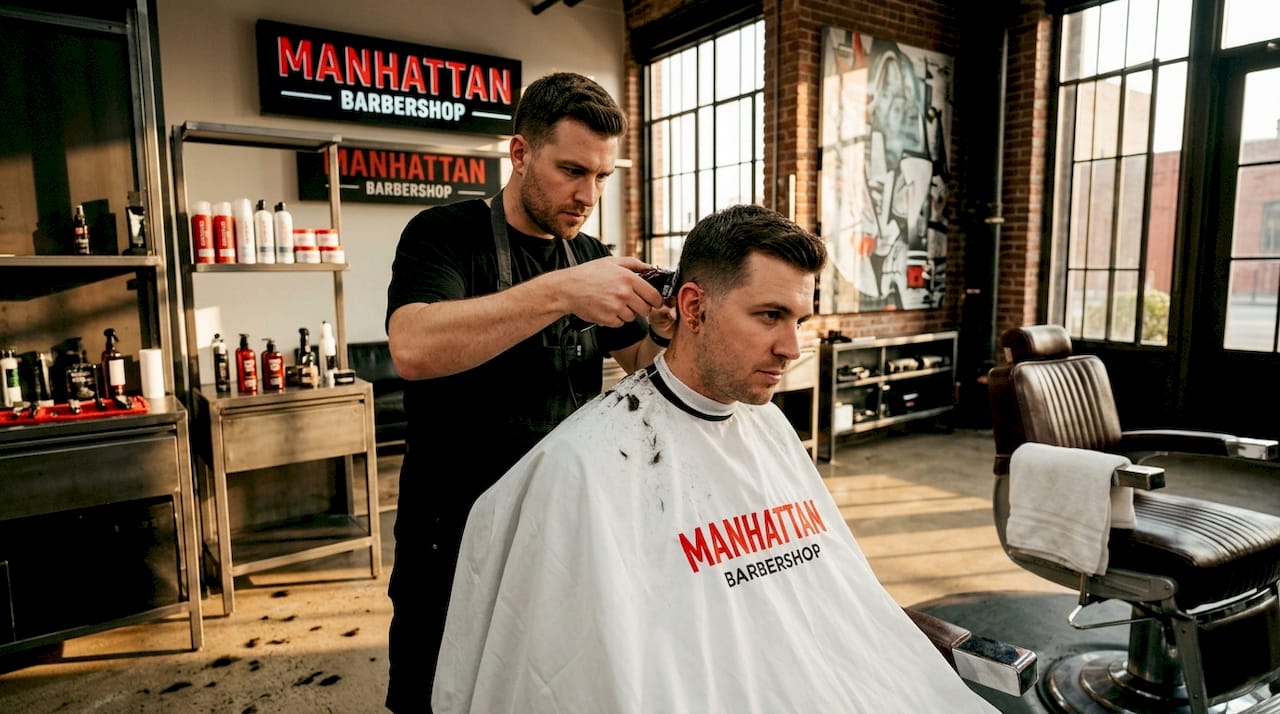
Finding a barber who matches your personal style is the practice of aligning a barber’s technical skills, specialization, and communication approach with your specific hair type, face shape, and grooming goals. Most men pick a barber based on proximity or price and then spend months tolerating haircuts that are close but never quite right. The smarter approach treats barber selection as a deliberate process: research their portfolio, understand your own hair, prepare clear references, and run a trial visit before committing. This guide covers every step.
How to find a barber who matches your personal style
The first and most reliable vetting step is reviewing a barber’s social media portfolio on Instagram or TikTok before you ever walk through the door. You are not looking for a single impressive post. The strongest signal is consistent style posting that matches your desired haircut category, whether that is fades, textured cuts, or beard sculpting. One viral photo proves nothing. Thirty posts showing clean, repeatable low fades proves mastery.
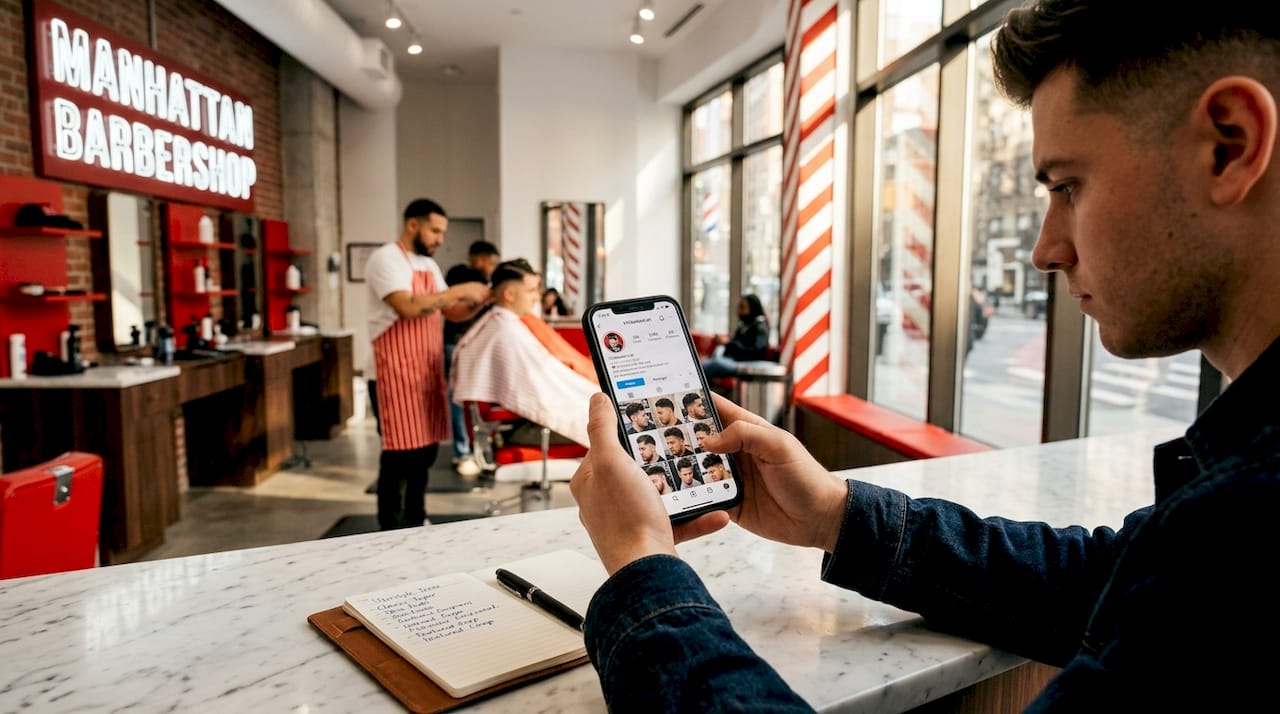
After the portfolio, move to reviews. Star ratings are a weak signal on their own. Client comments reveal patterns around listening skills, rushed appointments, and shop atmosphere that a four-star average will never show you. Look for repeated praise about communication and repeated complaints about the same issue. Both tell you exactly what to expect.
The shop environment itself is a data point. Cleanliness, professionalism, and a clear booking system correlate with quality client experiences. A shop that cannot manage its schedule reliably is unlikely to manage your haircut with precision either.
Here is what to check during your research phase:
Portfolio consistency: Does the barber post the same style category repeatedly, or is the feed scattered across every cut imaginable?
Specialization match: A barber who specializes in barbershop specialization for textured or curly hair will outperform a generalist on those cuts every time.
Review language: Words like “he actually listened” or “she asked what I wanted different” signal a barber who consults rather than assumes.
Booking system: Easy online scheduling indicates a professional operation that respects your time.
Pro Tip: Search the barber’s name plus your desired cut style, such as “low fade” or “side part,” on Google Images to see if their work appears in public posts beyond their own profile.
Does your hair type and face shape change which barber you need?
Yes, and most men skip this step entirely. Understanding your own hair before you choose a barber is what separates a good haircut from a great one. Straight, curly, and coarse hair each require different cutting techniques, and not every barber has equal depth in all three. A barber who excels at hair type techniques for fine straight hair may produce mediocre results on dense, coarse hair simply because the cutting approach is different.

Face shape is equally important. Face shape categories help identify flattering haircuts by matching cut proportions to facial geometry. An oval face can carry almost any style. A square face benefits from cuts that add height and reduce width at the sides. A round face needs volume at the crown, not the sides. Knowing your category before you sit in the chair means you can ask for cuts that work with your structure, not against it.
Here is a quick reference for matching face shape to cut direction:
Face shape | Recommended cut direction | Styles to avoid |
Oval | Any direction works | None specifically |
Square | Add height, reduce side width | High-volume sides |
Round | Volume at crown, tight sides | Full, rounded silhouettes |
Oblong | Width at sides, shorter top | Tall, narrow styles |
Heart | Textured top, fuller sides | Very tight sides |
Digital tools like face shape detectors and AI hairstyle preview apps are useful preparation aids before your appointment. They do not replace a skilled barber, but they give you a vocabulary and a visual reference to bring into the consultation.
Pro Tip: Take a straight-on photo of your face against a plain wall, then trace the outline. Compare it to the five standard shapes. This takes two minutes and immediately narrows your cut options.
How to prepare for your barber appointment so nothing gets lost in translation
Preparation is where most men fail. They walk in, say “clean it up,” and then wonder why the result never matches what they pictured. Effective preparation removes ambiguity before the scissors come out.
Follow these steps before every appointment, especially with a new barber:
Bring three reference photos. Treat them as specifications. Include one image of your dream silhouette, one that shows the texture you want, and one labeled “never” that shows what you want to avoid. Reference photos as specifications constrain barber execution and eliminate guesswork on both sides.
Learn the terminology, then verify it. Terms like “low fade” mean different things to different barbers. Common terms have variable interpretations, and photos resolve the gap faster than any verbal description. Show the photo, confirm the barber sees what you see, then proceed.
Describe your styling routine. Tell your barber how much time you spend on your hair each morning and what products you use. A barber who knows you air-dry and use no product will cut differently than one who assumes you blow-dry and use pomade daily. The cut should match the life you actually live.
State what you want different from last time. Effective consultations include an open question about what to change, followed by a read-back confirmation. If your barber does not ask, volunteer it. “Last time it was a little too tight on the sides” is the most useful sentence you can say.
Book your first visit as a trial. Use initial trims as trial visits before any important occasion. A simple taper or trim reveals how a barber listens, how they handle the consultation, and whether their execution matches their portfolio. Never test a new barber the week before a job interview or a wedding.
The goal of preparation is not to micromanage the barber. It is to give a skilled professional the information they need to do their best work. The barbers at Manhattanbarbershopny describe this as a two-way process: the client brings clarity, the barber brings craft.
Should you use AI hairstyle tools before visiting a barber?
AI hairstyle preview tools are worth using as a preparation step, not as a replacement for professional judgment. Tools like BarberGPT let you upload a photo and test multiple styles digitally before committing to a cut. AI previews cost $0.05 to $0.30 each, which means you can test seven to ten styles for under three dollars. That is a low-cost way to narrow your options before sitting in the chair.
The limitations are real and worth knowing. Most AI tools do not preview beard treatments, color changes, or how a cut behaves in your specific hair texture. They render idealized versions of styles on your face shape, which is useful for direction but not for precision. BarberGPT AI is best used as a test-drive tool to preview many styles quickly before committing to an actual haircut, not as a final decision-maker.
Here is how AI tools and traditional barber services compare:
Feature | AI hairstyle preview | Traditional barber |
Speed | Instant | 30 to 60 minutes |
Cost | Under $1 per style | $25 to $80 per cut |
Texture accuracy | Low | High |
Beard/color preview | Limited | Full capability |
Best use | Exploration and reference | Execution and refinement |
The smartest approach combines both. Use an AI tool to generate two or three candidate looks, screenshot the ones that resonate, and bring those images to your barber as part of your reference photo set. You arrive with visual proof of what you want, and your barber arrives with a clear brief. That combination produces better results than either approach alone.
Pro Tip: When using AI preview tools, test the same style on three different photo angles of your face. A cut that looks good from the front may not work from the side, and your barber will see both.
Key takeaways
Finding a barber who matches your personal style requires deliberate research, self-knowledge about your hair type and face shape, and clear communication tools like reference photos and AI previews before your first appointment.
Point | Details |
Portfolio consistency matters most | Look for repeated posts in your desired style category, not a single impressive photo. |
Know your hair type before you search | Different textures require different techniques; match the barber’s specialization to your hair. |
Reference photos remove ambiguity | Bring a dream silhouette, a texture match, and a “never” image to every new barber visit. |
Trial visits protect you | Book your first appointment for a simple trim, never before a high-stakes event. |
AI tools are preparation, not replacement | Use AI hairstyle previews to generate reference images, then let a skilled barber execute the cut. |
What I’ve learned from watching men finally get the haircut they wanted
I have seen the same pattern repeat itself at Manhattanbarbershopny more times than I can count. A client walks in frustrated after years of mediocre cuts. He has never brought a reference photo. He has never described his styling routine. He has never told a barber what he wanted different. He assumed the barber would just know.
The transformation that happens when a client arrives prepared is not subtle. Eugene Solod, the owner of Manhattanbarbershopny, has built the shop’s entire approach around the consultation first. The cut follows the conversation, not the other way around. That philosophy is what separates a shop that delivers great barber skills from one that just moves people through chairs.
My honest observation is this: most men underestimate how much their own preparation determines the outcome. A skilled barber can only work with the information you give them. The clients who leave most satisfied are not the ones with the most interesting hair. They are the ones who showed up knowing what they wanted and said it clearly.
Treat the first appointment as a test, not a commitment. If the barber listens, asks follow-up questions, and confirms before cutting, you have found someone worth returning to. If they pick up the clippers before you finish your sentence, that tells you everything you need to know.
— Evgenii
Get a personalized haircut at Manhattanbarbershopny
Manhattanbarbershopny on the Upper East Side of New York City specializes in exactly the kind of personalized barber services this article describes. Eugene Solod and his team take the time to understand your hair type, face shape, and grooming routine before any cut begins. Whether you want a clean fade, a refined side part, or a medium beard design that ties your whole look together, the shop delivers cuts that hold their form for weeks without requiring heavy product.
Walk-ins are welcome, and online booking takes under a minute. If you want to experience what a truly personalized haircut feels like, book your first visit as a trial and see the difference a consultation-first approach makes.
FAQ
How do I find a barber who specializes in my hair type?
Search the barber’s Instagram or TikTok for posts featuring your specific hair texture, whether curly, coarse, or fine. Consistent posting in your hair category is a stronger signal than any single impressive result.
What questions should I ask my barber before a cut?
Ask your barber to confirm what they understand from your reference photos, and describe your daily styling routine so they can cut for how you actually wear your hair. A barber who asks “what do you want different this time?” is one worth keeping.
Can AI hairstyle tools replace a real barber consultation?
No. AI hairstyle preview tools like BarberGPT are useful for generating reference images and exploring style options before your appointment, but they cannot account for your hair texture, growth patterns, or beard integration. Use them as a starting point, not a final answer.
How many reference photos should I bring to a new barber?
Bring at least three: one showing the silhouette you want, one showing the texture you want, and one showing a style you want to avoid. This three-photo approach gives your barber a clear brief and reduces the chance of a misunderstanding.
How do I know if a barber is right for me after the first visit?
A barber who listened during the consultation, confirmed details before cutting, and produced a result close to your reference photos is worth rebooking. If the cut drifted significantly from what you described, treat it as data and keep looking.
Recommended
Comments