Barber Consultation: What to Expect on Your First Visit

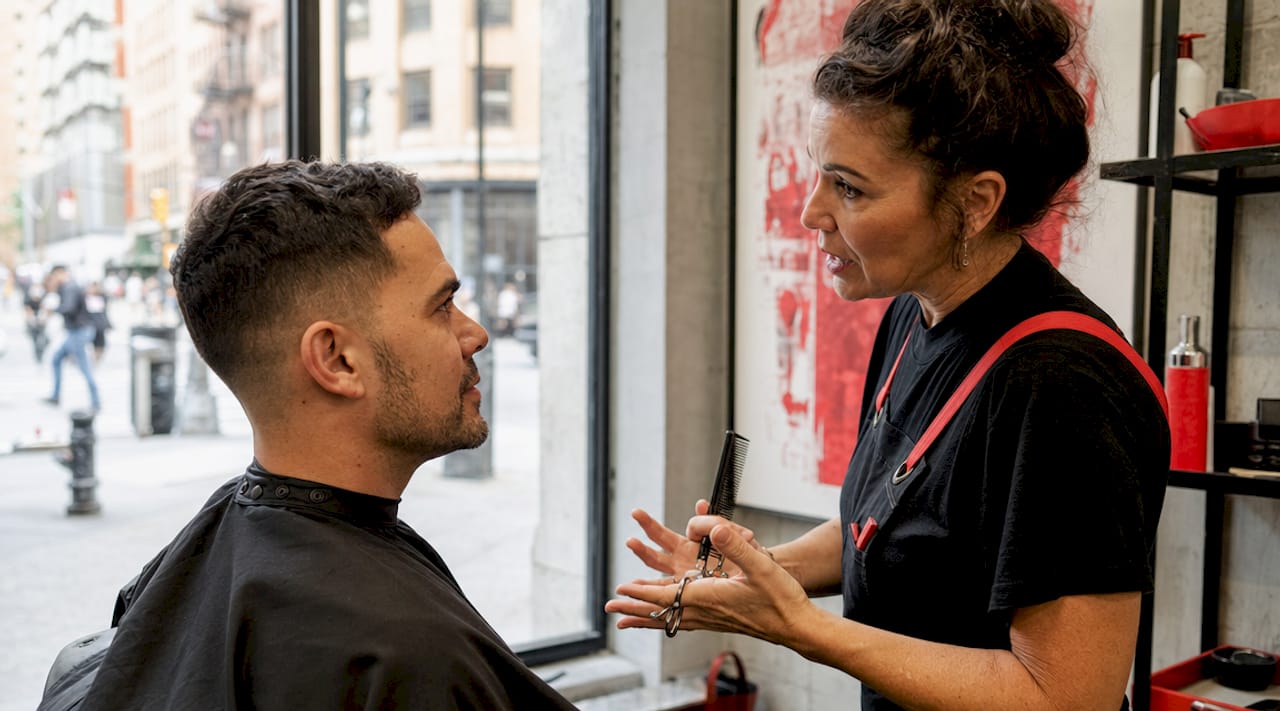
A barber consultation is a structured conversation between you and your barber that determines the cut, style, and grooming approach best suited to your hair type, face shape, and daily routine. Most men skip this step mentally, treating it like small talk before the real work begins. That’s a mistake. The consultation is where a good haircut is actually designed. At Manhattanbarbershopny, owner Eugene Solod built the entire client experience around this principle: understand the person first, then pick up the clippers. This guide walks you through every stage of the barbershop consultation process so you walk in prepared and walk out satisfied.
What happens during a barber consultation
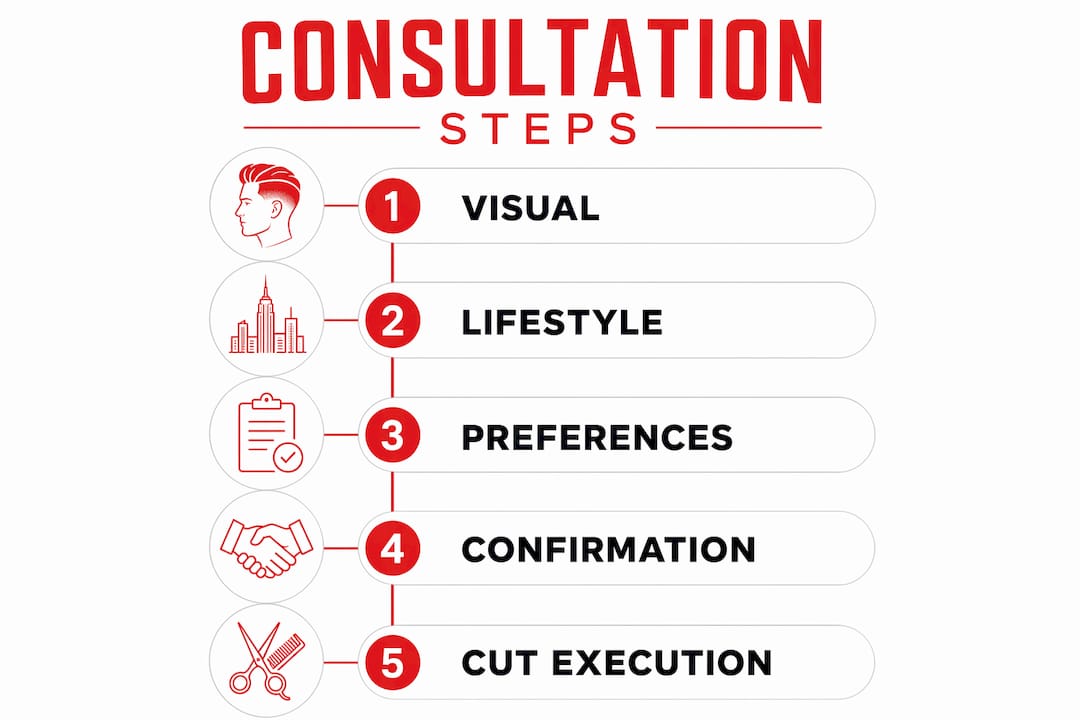
The industry term for this process is a style consultation, and first-time visits are routinely scheduled for 30 to 60 minute blocks to allow time for a thorough initial assessment. The consultation itself runs 5 to 10 minutes within that window. That’s enough time to cover everything that matters, provided you come prepared.
The visual assessment
Your barber starts by examining your hair before a single word is spoken. Barbers assess dry hair growth patterns, density, texture, and natural movement to understand what styles are physically achievable. A cowlick at the crown, a strong widow’s peak, or fine hair that lies flat all change what a finished cut can look like. Understanding why hair type matters is the foundation of every honest style recommendation.
The lifestyle and maintenance conversation
After the visual check, your barber asks targeted questions. Standard topics include how much time you spend styling each morning, whether you prefer a sharp outlined look or a softer natural finish, and how often you plan to return for maintenance. These answers directly shape the cut plan. A style that looks great with 20 minutes of daily product work is useless to someone who air-dries and walks out the door.
Service confirmation and pricing
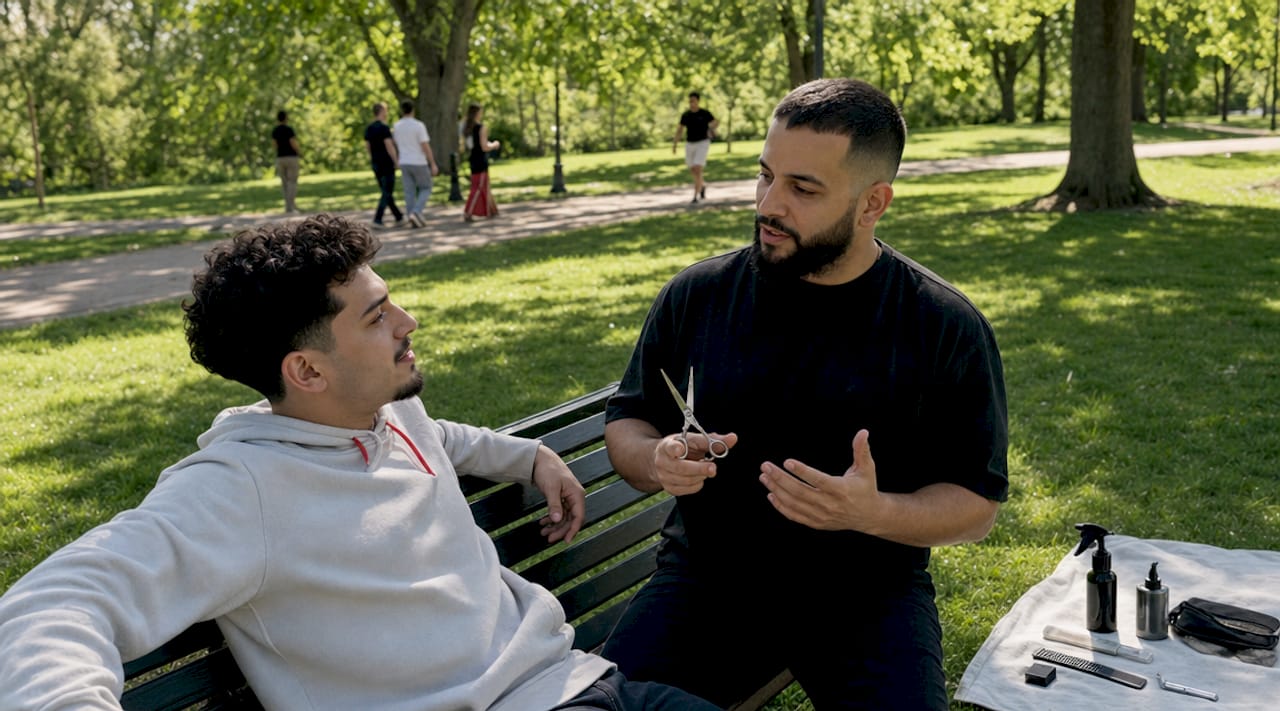
A professional consultation also covers the practical side. Your barber will confirm which services are included, quote the price, and give you a realistic time estimate. If you want beard work or a straight razor shave alongside your cut, this is when those are added to the plan. For chemical services like color or relaxers, written consent is often required, and patch tests are typically needed 24 to 48 hours in advance.
Here is a quick summary of what a standard consultation covers:
Visual inspection of hair type, density, and growth direction
Questions about your styling routine and maintenance preferences
Review of reference photos and feasibility check
Discussion of beard, shave, or additional services
Confirmation of price, duration, and next steps
How to prepare for your first barber appointment
Preparation is what separates a productive consultation from a vague one. The more specific information you bring, the more precisely your barber can work.
Bring 2 to 3 reference photos. Use images that show styles you like and at least one showing what you want to avoid. Photos from Google, Instagram, or Pinterest all work. The goal is to give your barber a visual starting point, not a blueprint to copy exactly.
Arrive with clean, product-free hair. Gel, wax, and pomade hide your hair’s natural texture and growth patterns. Your barber needs to see your actual hair to assess it accurately.
Know your daily styling limit. Be honest about whether you’ll spend 5 minutes or 15 minutes on your hair each morning. A cut that requires daily styling effort will look neglected within a week if you don’t follow through.
Flag any upcoming events. A wedding, job interview, or reunion in two weeks changes the timing and conservatism of the cut. Mention it upfront.
Share past frustrations. If a previous barber cut your fade too high or left the top too heavy, say so. Describing what went wrong before gives your barber specific, actionable information to work with.
Check hygiene standards before you sit down. A reputable shop disinfects shears, combs, and clippers between every client using EPA-registered disinfectants. If tools are pulled from a drawer without being cleaned, that’s a red flag worth noting.
Pro Tip: Book your first appointment on a weekday morning when the shop is less busy. Your barber will have more time to talk through your options without feeling rushed.
How to communicate your style preferences effectively
The biggest communication mistake men make is reaching for technical jargon they half-understand. Saying “I want a number two on the sides with a skin fade blended into a textured crop” sounds specific, but if you’re not sure what any of those terms mean in practice, you’re setting yourself up for confusion. Describing how you want your hair to feel and function is far more useful.
Tell your barber things like: “I want it short enough that I don’t have to style it every day” or “I want the top long enough to push back but not so long it flops forward.” These functional descriptions give your barber the information they need to customize cuts individually for your specific features.
Reference photos work best as conversation starters. Skilled barbers adapt popular styles based on a client’s unique hair features rather than copy them exactly. If you bring a photo of a celebrity with thick, wavy hair and yours is fine and straight, your barber will tell you what elements of that style are achievable and what needs to be modified. That conversation is the expectation check, and it’s one of the most valuable parts of the entire visit.
A few communication principles that consistently produce better results:
Lead with function, then aesthetics. Start with how you need the hair to behave, then describe how you want it to look.
Be honest about your skill level. If you don’t know how to use a blow dryer or styling product, say so. Your barber will adjust the cut accordingly.
Ask questions freely. There is no bad question during a consultation. If your barber recommends something you don’t understand, ask them to explain it.
Discuss beard and facial structure together. If you have a beard or are growing one, bring it into the conversation. The relationship between your haircut and beard line affects how your face reads overall, and a skilled barber factors that into the cut plan.
Pro Tip: If you’re unsure about a style, ask your barber what they would recommend for your face shape and hair type. A barber who matches your personal style will give you an honest answer, not just tell you what you want to hear.
Common mistakes men make during barber consultations
Knowing what goes wrong is just as useful as knowing what to do right. These are the most frequent missteps that lead to regret after a first visit.
Staying silent during the cut. Clients who speak up mid-cut get better results. Adjustments are far easier to make during the shaping process than after the cut is finished. If something looks off at the halfway point, say something immediately.
Expecting a celebrity photo to transfer exactly. A photo of David Beckham or Timothée Chalamet shows a style executed on a specific hair type, by a professional team, under studio lighting. Your barber can deliver the spirit of that look, not a pixel-perfect copy.
Ignoring your hair type when choosing a style. Fine hair cannot hold the same volume as thick hair. Curly hair behaves differently when cut short versus long. A tailored consultation that evaluates face shape, hair type, and lifestyle produces a cut that is functional and repeatable, not just impressive on day one.
Hiding your maintenance limitations. Telling your barber you’ll style your hair every day when you won’t leads to a cut that looks great in the chair and disappointing two days later. Honesty here protects you.
Skipping hygiene checks. Barbershop hygiene standards require tools to be disinfected between every client. Contact time for disinfectants ranges from 30 seconds to 10 minutes depending on the product. A shop that skips this step is cutting corners on your safety, not just their workload.
Ignoring aftercare advice. Your barber’s product and maintenance recommendations are part of the service. Dismissing them means the cut degrades faster than it should.
Key takeaways
A successful barber consultation depends on preparation, honest communication, and a willingness to treat the conversation as a two-way exchange rather than a one-sided order.
Point | Details |
Consultation duration | The style consultation runs 5 to 10 minutes within a 30 to 60 minute first-time appointment. |
Preparation matters | Bring 2 to 3 reference photos and arrive with clean, product-free hair for accurate assessment. |
Function over jargon | Describe how you want your hair to behave daily rather than using technical terms you’re unsure of. |
Speak up mid-cut | Adjustments are easier during the cut than after. Silence during the process is the most common source of regret. |
Hygiene is non-negotiable | Confirm tools are disinfected with hospital-grade products between every client before you sit down. |
What I’ve learned from watching consultations go right and wrong
I’ve seen the full range of first-time client experiences, and the pattern is consistent. The men who leave satisfied are not the ones who knew the most technical terminology. They’re the ones who showed up with a clear sense of what they wanted their hair to do for them and stayed engaged throughout the process.
The most underrated part of any consultation is the expectation check. When a barber tells you that a specific style won’t work with your hair type, that’s not a rejection. That’s expertise protecting you from a cut you’d regret. The barbers at Manhattanbarbershopny do this constantly, and clients who trust that process leave with styles that hold their shape for weeks without requiring a cabinet full of products.
The other thing I’d push back on is the idea that the consultation ends when the cutting starts. It doesn’t. The best consultations are ongoing conversations. You check in when something looks different than expected. You ask about the taper when it’s being blended. You confirm the length before the final pass. Treating the whole appointment as collaborative, not just the first five minutes, is what separates a good haircut from a great one.
— Evgenii
Your first consultation at Manhattanbarbershopny
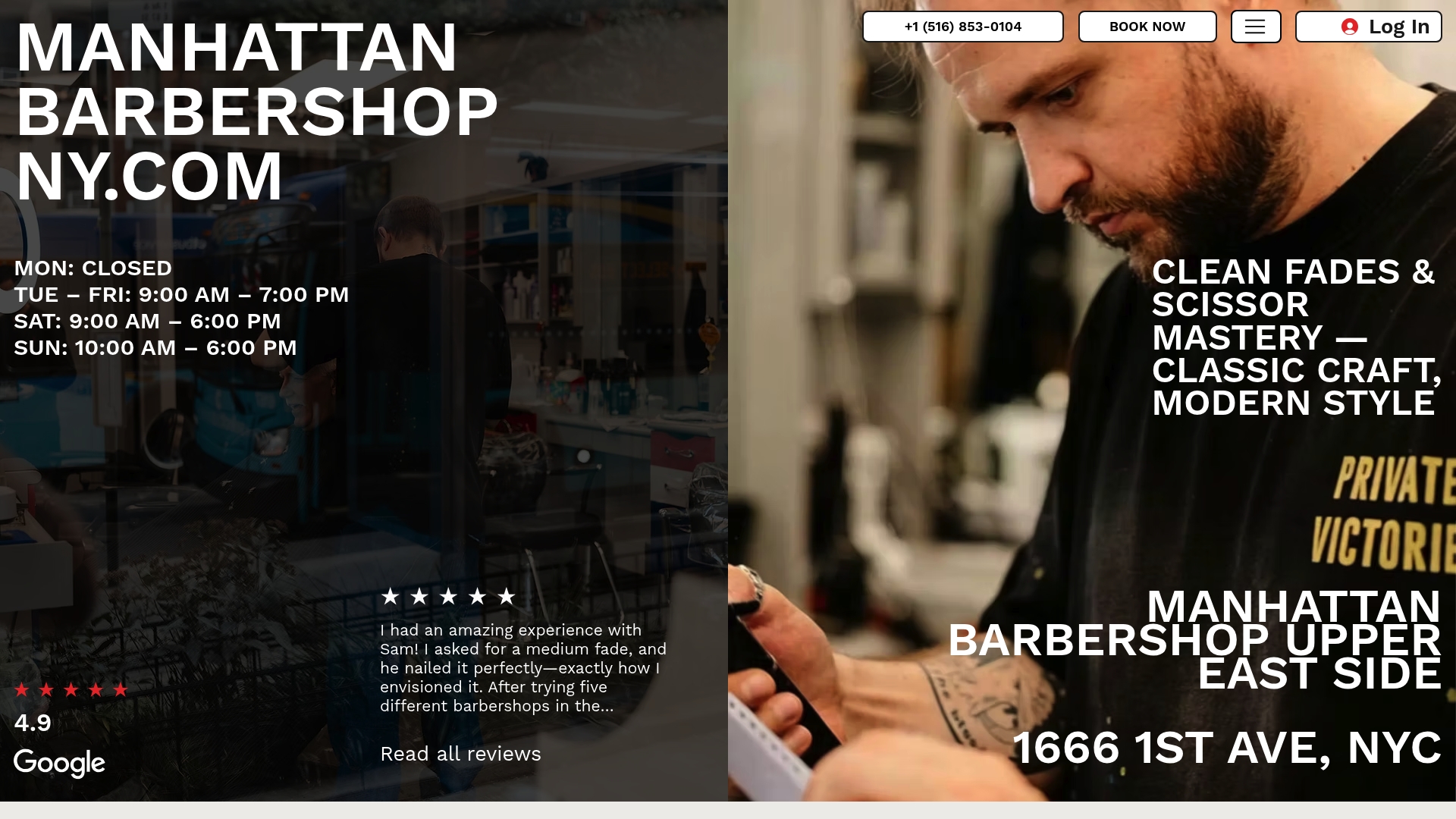
Manhattanbarbershopny on the Upper East Side structures every appointment around the consultation first. Eugene Solod and his team assess your hair type, discuss your lifestyle, and build a cut plan before a clipper touches your head. Whether you’re booking a regular haircut, exploring a bold Iroquois cut, or adding a medium beard design to your look, every service starts with a real conversation. The shop maintains strict sanitation standards and a relaxed atmosphere that makes first-time clients feel at ease from the moment they sit down. Book your appointment online and come in knowing exactly what to expect.
FAQ
How long does a barber consultation take?
A barber consultation typically runs 5 to 10 minutes within a 30 to 60 minute first-time appointment. That window covers hair assessment, style discussion, and service confirmation.
What should I bring to my first barber consultation?
Bring 2 to 3 reference photos showing styles you like and at least one showing what you want to avoid. Arrive with clean, product-free hair so your barber can accurately assess your natural texture and growth patterns.
Can I use a celebrity photo during my barber consultation?
Yes, but treat it as a starting point rather than an exact target. Skilled barbers adapt popular styles to your specific hair type and face shape rather than copy them directly, which produces a more realistic and maintainable result.
What hygiene standards should I look for at a barbershop?
Professional barbershops disinfect shears, combs, and clippers between every client using EPA-registered hospital-grade disinfectants. If you don’t see tools being cleaned before your cut, it’s reasonable to ask about the shop’s sanitation process.
What if I don’t like the direction of the cut halfway through?
Speak up immediately. Adjustments made during the cut are far easier than corrections after it’s finished. A professional barber will welcome the feedback and make changes without issue.
Recommended
Comments