Say These 3 Phrases in the Chair: Classic Taper Haircut for Men

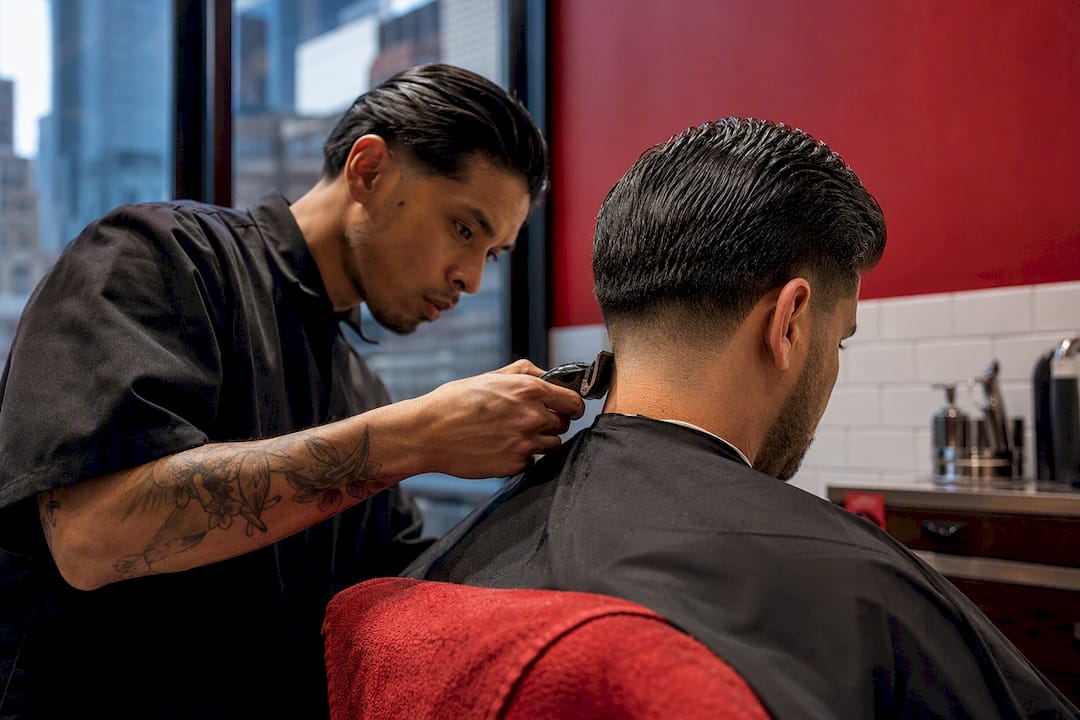
A classic taper haircut keeps hair longest on top and gradually shortens down the sides and back, ending in a soft, natural hairline with no skin showing. It’s the most versatile men’s cut out there, works across nearly every hair type, and grows out gracefully instead of turning ragged. Most guys get one refreshed every 4 to 6 weeks.
TL;DR:
A low taper start creates a conservative, professional look suitable for formal settings, while a high taper offers more contrast and style options.
Straight hair tapers with clean, precise lines, whereas wavy and curly hair require texturizing and different techniques to manage natural volume and curl patterns.
Waiting more than six weeks between trims can lead to a shaggy appearance and visible transition lines, reducing the taper’s polish and freshness.
Clarifying taper height, top length, and guard numbers during communication prevents mismatched expectations and helps achieve the desired shape.
Taper appointments typically last 30 to 45 minutes, with personalized consultations ensuring the cut fits face shape, hair type, and styling routines.
Table of Contents
What Makes a Classic Taper Haircut Different From a Fade
A taper works through graduation, not contrast. The hair shortens step by step from crown to hairline, but it never touches skin, and the neckline and sideburns stay soft and natural. A fade, by comparison, blends all the way down to skin or near skin along the sides, creating a sharper visual break between long and short. Some barbers split the difference with a taper fade, a hybrid that starts like a fade near the ears and softens into a taper as it moves toward the crown.
Here’s how to spot the differences at a glance:
Classic taper: graduated shortening, no skin exposure, preserved neckline
Skin fade: hair blends to bare skin along the sides and back
Taper fade: a fade near the hairline that softens into a taper higher up
Top length paired with a classic taper haircut typically runs anywhere from 1 to 4 inches, which is exactly why the same underlying cut can look conservative on a banker and modern on a college kid. The taper is a technique, not a single fixed look, and that flexibility is the whole point.
Low, Mid, and High Taper: Choosing Your Contrast Level
Where the taper starts changes the entire personality of the cut. A low taper begins just above the ears and stays close to the natural hairline, which reads as the most conservative option and the safest choice for formal workplaces. A mid taper starts around the temple and gives noticeably more contrast without looking flashy, landing squarely in “modern classic” territory. A high taper begins well above the ear, closer to the crown, and creates bold contrast while still avoiding the skin exposure of a full fade.
Top length matters just as much as taper height. A short top, generally 1 to 1.5 inches, needs almost no daily effort and works well if you want to towel-dry and go. A longer top of 3 inches or more opens up real styling options, from a swept-back finish to a textured crop, but it also means five extra minutes with a comb and product every morning.
Low taper, short top: the buttoned-up look for interviews, courtrooms, and client meetings
Mid taper, medium top: the most requested combination in most shops, balancing polish and edge
High taper, long top with a side part: classic Ivy League styling with more visual drama
Mid taper, textured crop: low effort, high payoff for guys who want movement without a routine
Pro Tip: If you’re not sure which taper height suits you, start with a mid taper. It’s the easiest to dial up or down at your next visit once you see how it grows out on your specific hair.
Which Taper Suits Your Face Shape and Hair Type
Face shape drives more of the decision than most guys realize. Round faces benefit from extra height on top, since added vertical length helps elongate the face rather than widen it further. Square jaws look sharper with a mid taper that softens the transition along the jawline instead of drawing a hard line straight across it. Oval faces have the most freedom and can wear almost any taper height or top length. Heart-shaped faces do best when the barber adds a little width at the temples to balance a narrower chin.
Hair texture changes the technique as much as the face shape does:
Straight hair tapers cleanly and holds a crisp line with minimal effort
Wavy hair adds natural texture that pairs well with a mid taper and a slightly longer top
Curly hair often needs texturizing shears on top so the taper doesn’t look boxy as curls expand
Fine or thinning hair benefits from point-cut layering on top, a technique that creates the illusion of more density rather than just leaving length behind
Beard and sideburn shape finish the job. A barber who tapers your sides but ignores your beard line leaves the cut looking unfinished, so ask them to connect the taper into your sideburns and beard for one continuous shape rather than two separate decisions.
How to Ask Your Barber for the Cut You Actually Want
Vague requests produce vague results. Instead of saying “short on the sides,” give your barber a taper height, a guard number or inch measurement for the top, and a photo if you have one.
Try phrases like these at the chair:
“Low taper, keep the top around 2 inches, natural part”
“Mid taper with a 3 on top blended into a 1 on the sides”
“High taper, longer top, I want to slick it back”
Clipper guards translate directly into length, and knowing the numbers saves you from a cut that’s shorter than you meant:
If you bring a reference photo, point specifically at where the taper starts on the head and how much neckline is left untouched. Those two details matter more than the overall silhouette, since lighting and hair thickness can make two very different cuts look similar in a photo.
Styling and Maintenance: Keeping the Cut Looking Fresh
Short tops need almost nothing. Towel-dry, run your fingers through it, and you’re done in under a minute. Medium and longer tops benefit from a small amount of product worked in while hair is still slightly damp, then a quick pass with a comb or your hands to set the direction.
Product choice depends on the finish you want:
Matte clay or paste delivers a natural, textured look with no shine, ideal for a casual crop
Water-based pomade adds shine and stronger hold, better suited to a swept-back or side-part style
Sea-salt spray boosts volume and works well on wavy or fine hair that tends to fall flat
Maintenance timing depends on how much contrast you chose. A low-contrast taper typically holds its shape for 4 to 6 weeks before the line starts to soften noticeably, while higher-contrast tapers with more visible graduation show grow-out sooner and may need attention closer to the 3 to 4 week mark. If you want to stretch time between visits, ask your barber to leave slightly more length at the nape during your last cut. That small buffer keeps the shape intact longer instead of collapsing into an awkward in-between stage.
How Experienced Barbers at Manhattan Barbershop Approach a Classic Taper
A good taper starts with a real conversation, not a rushed guess. Barbers at Manhattan Barbershop assess hair density, head shape, and how much time you actually spend styling before picking a taper height and top length, rather than defaulting to whatever’s trending.
That consultation shapes real technique decisions:
Thinning hair gets point-cut layering on top instead of blunt cutting, which adds the appearance of fullness
Curly hair gets texturized rather than boxed, so it moves naturally instead of sitting stiff
Round faces get extra height built into the top to elongate the overall shape
Low-maintenance clients get a lower-contrast taper that grows out cleanly between visits
This piece was shaped with input reflecting Evgenii’s barber expertise, drawing on the kind of client-specific adjustments that separate a cut that lasts weeks from one that needs constant touch-ups.
History and Origins of the Classic Taper Haircut
The taper’s roots trace back to military grooming standards of the early to mid-20th century, when short, neat, and low-maintenance cuts became practical necessities rather than fashion statements. Barbers adapted those close-cropped military styles for civilian life, softening the hard lines into the graduated shape we now recognize as the classic taper.
By the mid-century, the taper had become a fixture in American barbershops, favored by professionals who needed a cut sharp enough for the office but easy enough to maintain without daily fuss. It never fully disappeared from style rotation the way more trend-driven cuts did, largely because it has remained a common request in American barbershops for decades, thanks to how gracefully it grows out and how well it fits professional dress codes.
The 1990s and 2000s saw the taper absorb influences from hip hop and streetwear culture, which pushed taper heights higher and introduced sharper contrast into what had been a fairly conservative cut. That evolution is part of why today’s taper isn’t one single look. Grooming educators now describe it as the foundation of men’s grooming techniques, a base technique barbers adapt rather than a fixed style frozen in one decade. That’s a meaningful distinction: a trend has an expiration date, but a technique gets refined and passed down. The taper has done both, absorbing new top-length trends and beard pairings while keeping its core structure recognizable across 70 years of American barbering.
How a Barber Actually Executes a Classic Taper, Step by Step
The process starts with a consultation, where the barber checks your hair’s growth pattern, density, and how your hair naturally falls before touching clippers to head. Cowlicks and natural partings matter here. A barber who skips this step is guessing.
Next comes the bulk of the taper work, done with clippers using progressively longer guards moving up the head. The barber typically starts with the shortest guard near the neckline and hairline, then switches to longer guards in stages as they move toward the crown, blending each transition with clipper-over-comb technique so there’s no visible line between sections.
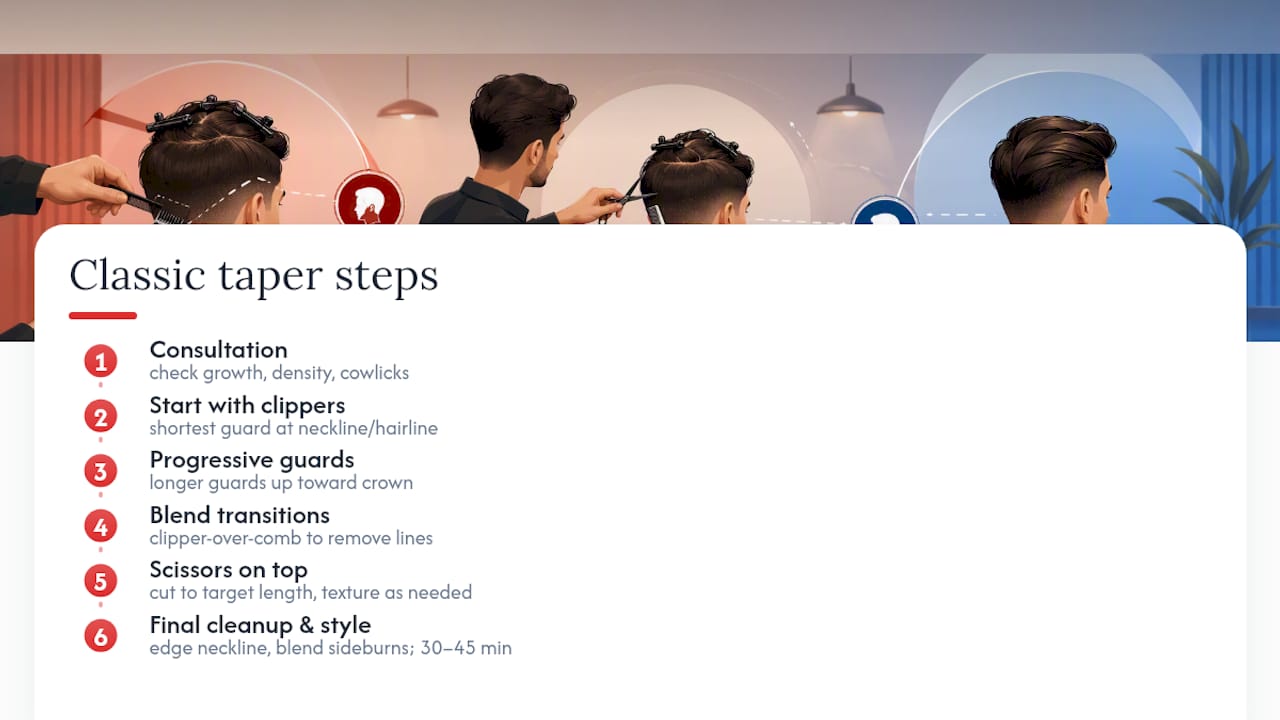
Scissors take over on top, where the barber cuts to the target length while checking it against the taper’s proportions. This is where face shape and hair type actually get applied rather than just discussed. Point cutting, texturizing, or straight-line trimming happen at this stage depending on the desired finish.
The final pass is cleanup: edging around the ears and neckline with a straight razor or trimmer, checking for any missed guard-line transitions, and blending the sideburns into the overall taper so nothing looks disconnected. A barber will often finish by styling the top the way you’d actually wear it, since a taper can look completely different wet versus styled and dry. The whole process, done well, usually runs 30 to 45 minutes in a professional setting.
Common Mistakes That Ruin a Classic Taper
The single biggest mistake is vague communication. Walking in and asking for “just a trim” or “short on the sides” leaves too much room for interpretation, and you’ll often walk out with either more contrast or less than you wanted. Bring a specific taper height, a top length, and ideally a photo.
Waiting too long between cuts is the second most common problem. A taper that goes 8 or 10 weeks without a trim doesn’t fail gracefully. It gets shaggy at the transition points first, which makes the whole cut look unkempt even though the top hasn’t changed much. Related to this: letting a barber rush the blend. A taper lives or dies on smooth transitions between guard lengths, and a rushed clipper-over-comb pass leaves visible lines that no amount of product can hide.
Overstyling is a quieter mistake but a real one. Piling on pomade or paste to compensate for a cut that’s grown out past its shape only draws more attention to the problem rather than solving it. And skipping the beard or sideburn connection is an easy oversight. A sharp taper on the sides paired with an untrimmed beard line looks like two different decisions instead of one cohesive style.
Finally, ignoring your own hair’s growth pattern is a mistake barbers see constantly. Requesting a top length or part style that fights against a natural cowlick or growth direction sets you up for a daily styling battle instead of a cut that falls into place on its own.
Ethnic Hair Textures Change the Taper Technique
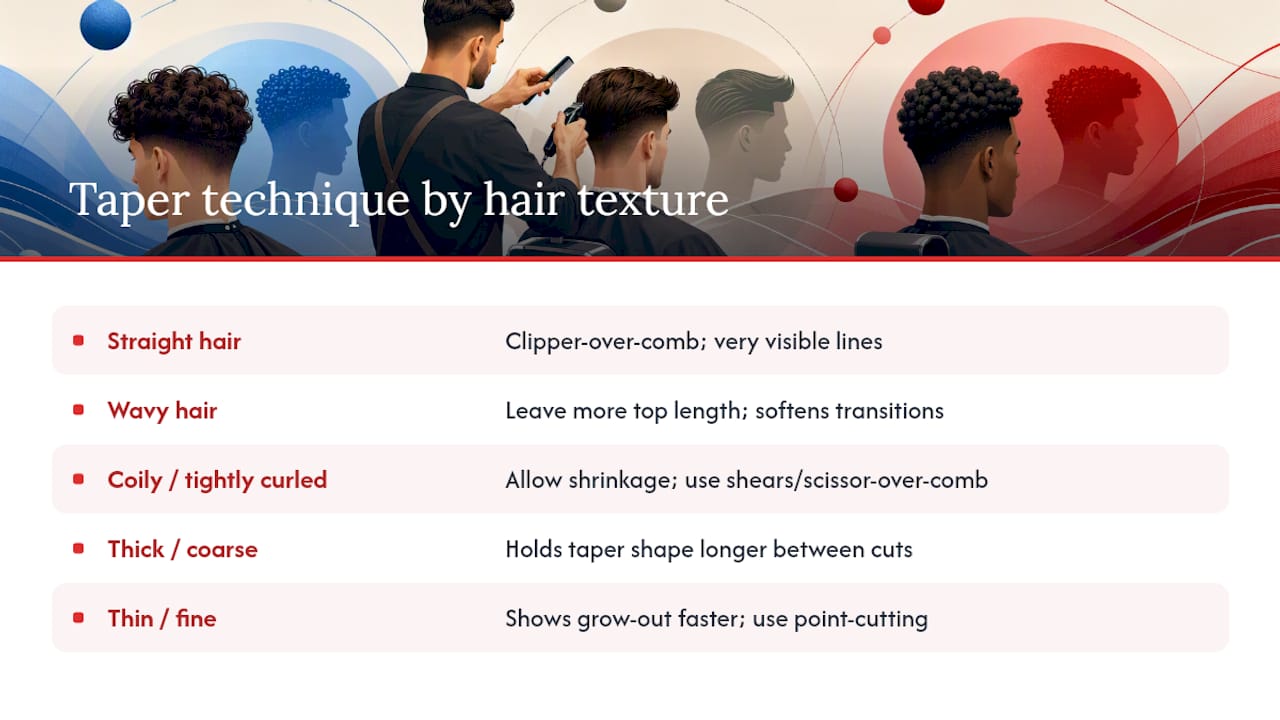
Straight hair, common among many East Asian and some European hair types, tapers with the cleanest visible lines because the hair lies flat and shows every transition point clearly. Barbers working with straight hair rely heavily on clipper-over-comb precision since there’s nowhere for an uneven line to hide.
Wavy hair, frequently seen in Mediterranean and Latin hair types, adds natural texture that softens harsh guard-line transitions almost automatically. Barbers often leave slightly more length on top with wavy hair to let that natural movement show rather than cutting it flat.
Coily and tightly curled hair, common in Black hair types, needs a different approach entirely. Because curl shrinkage means the hair appears shorter than its actual measured length, barbers often cut with extra length accounted for, and they favor scissor-over-comb or shears on top instead of relying only on guard numbers, which can produce unpredictable results on tight curl patterns. Taper transitions on coily hair also tend to look sharper and more defined once cut, since the curl pattern itself creates natural texture and separation without added product.
Thick, coarse hair, whatever the ethnic background, usually holds a taper’s shape longer between cuts simply because there’s more hair mass to grow out before the line softens. Thin or fine hair, by contrast, shows grow-out faster and often benefits from the point-cutting technique on top mentioned earlier, since it adds the visual density that finer strands lack on their own.
Why the Classic Taper Keeps Winning Requests
Clients ask for a taper more than almost anything else because it solves a real problem: they want to look sharp without relearning how to style their hair every morning. I’ve seen how a half-inch shift in where the taper starts, low versus mid, completely changes whether a guy reads as buttoned-up or a little edgier, even though the top hasn’t moved at all. That’s the part people underestimate. If you want one cut that photographs well, grows out without embarrassment, and doesn’t demand a cabinet full of products, the taper is the one to request.
— Evgenii
Book a Classic Taper at Manhattan Barbershop
Manhattan Barbershop is built around one idea: a taper should look intentional, not accidental, and that only happens with a real consultation before the clippers come out. Every appointment starts with a conversation about your hair density, face shape, and how much time you actually want to spend styling, so the taper height and top length get chosen for you specifically rather than copied off a chart.

Most taper appointments run 30 to 45 minutes in the chair, and both scheduled appointments and walk-ins are welcome depending on availability. If you’ve got a photo of a taper style you like, bring it in. It helps the barber pinpoint exactly where you want the taper to start and how much length to leave on top before a single guard touches your head. For style inspiration beyond what’s covered here, the Manhattan Barbershop blog has more cut breakdowns worth a look, and the shop’s approach to signature barbershop styles shows how the same taper adapts across different occasions.
Ready to get one that actually holds its shape for weeks? Book your appointment online and mention the taper height and top length you’re aiming for when you arrive.
Sources
Recommended
Comments