How to Describe Fade Style to Your Barber

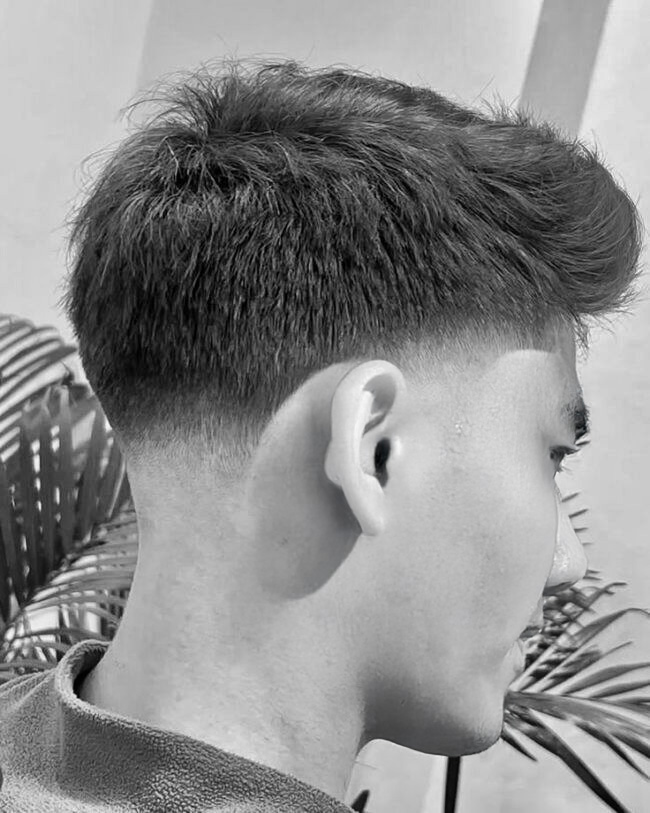
Walking out of a barbershop with the wrong fade is one of the most avoidable frustrations in men’s grooming. Yet it happens constantly, because most guys sit down and say something like “short on the sides” and hope for the best. Knowing how to describe fade style to your barber with precision changes everything. This guide gives you the exact vocabulary, preparation steps, and communication strategies to walk in confident and walk out with exactly the cut you had in mind.
Table of Contents
Key takeaways
Point | Details |
Learn fade height terms | Low, mid, and high fades describe where the transition starts on your head. |
Specify bottom length | Tell your barber skin, zero, or a guard number to control how short the fade goes. |
Bring a reference photo | Side and ear profile photos dramatically reduce miscommunication. |
Name the fade shape | Drop and burst fades look very different from a standard fade. Always name the shape. |
Discuss neckline and top | Your neckline style and top connection are as important as the fade itself. |
Understanding fade haircut basics
Before you can describe a fade style to your barber, you need to know what a fade actually is. A fade is a gradual shortening of hair that transitions from longer on top down to shorter on the sides and back. The hair does not just get cut short. It blends through multiple clipper lengths to create a smooth gradient effect.
Fade height: low, mid, and high
Fade height tells your barber where the transition begins on your head. Low fades start just above the ear, mid fades begin near the temple, and high fades start at or above the temple, close to the crown. The higher the fade, the more contrast you get between the top and sides. A high fade creates a bold, sharp look. A low fade is more subtle and conservative.
Bottom length options
The bottom length tells your barber how short the hair gets at the base of the fade. Your main options are:
Skin fade (bald fade): Goes down to bare skin using a foil shaver or razor. Maximum contrast.
Zero fade: Leaves a very slight shadow with no guard, about 0.5mm of hair. Subtle but still clean.
Shadow fade: Uses a #1 or #2 clipper guard. Does not fully expose the scalp. Softer overall look.
Using exact guard numbers like #1 or #2 removes all guesswork and gives your barber a precise target.
Fade shapes: standard, drop, and burst
This is where most guys go wrong. The shape of the fade changes how it follows the contour of your ear and skull. A standard fade runs in a relatively straight horizontal line around the head. Drop fades curve downward behind the ear, following the skull shape for a more relaxed, natural look. Burst fades radiate outward in a circular or fan pattern around the ear, creating a distinct, eye-catching effect. These are not interchangeable. Name the one you want.
Pro Tip: If you want a drop fade but only say “fade,” you will almost certainly get a standard fade. The shape is not assumed.
How to prepare before your appointment
Preparation is the difference between a good haircut and a great one. Most barbers can execute any style you want. The challenge is giving them enough information to do it.
Research your face shape. Round faces tend to benefit from higher fades with more volume on top. Square and oval faces work well with most fade heights. Knowing your face shape helps you choose a style that flatters you, not just one that looks good on someone else.
Find reference photos. Do not rely on memory or verbal description alone. Visual references reduce miscommunication far more effectively than words alone. Search for photos that show the exact fade height, shape, and top style you want. Crucially, find photos that show the side and ear profile, not just a front-facing shot.
Write down your key preferences. Before you sit in the chair, know your fade height (low, mid, high), your bottom length (skin, zero, or guard number), your fade shape (standard, drop, burst), and how you want the top to connect (blended or disconnected).
Decide on your neckline. A tapered neckline follows your natural hairline and grows out cleanly. A squared neckline is sharp and defined. A rounded neckline is softer and sits between the two. Neckline shape directly affects the final silhouette of your entire haircut.
Think about maintenance. Know how often you can realistically get a touch-up. This affects which fade style makes sense for your lifestyle.
Pro Tip: Screenshot two or three photos before your appointment and keep them in a folder on your phone. You will not have to scroll through hundreds of images while sitting in the barber chair.
Step-by-step: describing your fade at the chair
This is where preparation pays off. Follow this sequence every time you sit down.
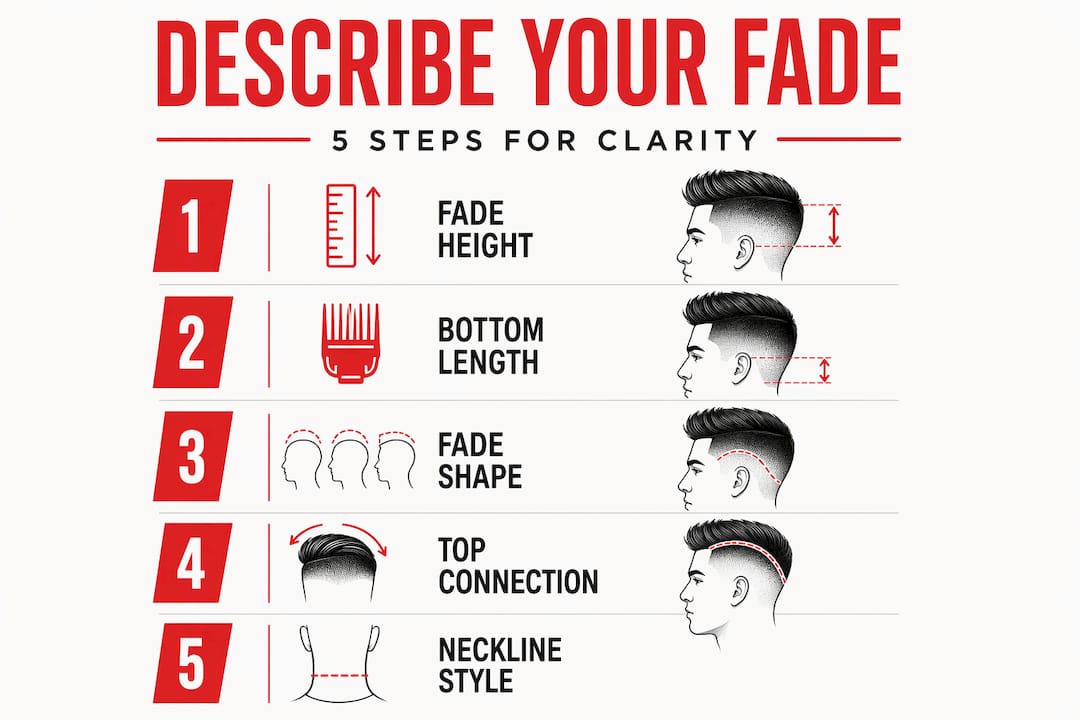
Step 1: State the fade height first. Open with something like “I want a mid fade” or “I’m going for a high fade.” This immediately orients your barber to the overall structure of the cut.
Step 2: Specify the bottom length. Follow up with the bottom length. “Mid fade down to a zero” or “high fade with a skin finish” gives your barber a complete picture of the contrast level you want.
Step 3: Name the fade shape. If you want a drop or burst fade, say it explicitly. Drop and burst fades require precise instructions because their ear transitions are structurally different from a standard fade. Say “I want a drop fade” or “I want a burst fade around the ear.”
Step 4: Describe the top connection. Tell your barber whether you want the fade to blend smoothly into the top or sit as a disconnected contrast. A blended connection creates a softer, more unified look. A disconnected style creates a sharp, defined boundary between the fade and the top. The fade line controls how harsh or seamless that transition appears.
Step 5: Cover the top length and neckline. Tell your barber how much length you want to keep on top and which neckline style you prefer. These details complete the full picture of your haircut.
Step 6: Show your reference photo. Hand over your phone and point specifically to the side profile. Confirm your barber understands the request before any cutting starts. A quick “does that make sense?” takes five seconds and saves a lot of regret.
Here is a quick reference for what to cover:
Common mistakes that ruin fade results
Most bad fade haircuts trace back to one of these errors. Recognizing them is half the battle.
Saying “short on the sides” without specifics. This phrase tells a barber almost nothing. Short could mean a #3 guard or a skin fade. Vague requests lead to style mismatches every time.
Not specifying fade height. Without a height, your barber defaults to their own preference or the most common request they get. You might want a low fade and end up with a high one.
Skipping the bottom length. Forgetting to mention skin versus guard leaves the contrast level entirely up to interpretation. This is one of the most common sources of disappointment.
Ignoring the fade shape. Assuming your barber will choose the right shape without being told is a gamble. Drop and burst fades require explicit requests.
Not discussing the top. The top hair is half the haircut. Leaving it vague often results in length you did not want removed or a connection style that does not match your vision.
Skipping the photo. Verbal descriptions alone have real limits. Clear terminology combined with photos consistently produce better results than words alone.
Pro Tip: If you are unsure about any detail, ask your barber for their recommendation based on your face shape and hair texture. A good barber will give you an honest answer, not just tell you what you want to hear.
Styling and maintenance for your fade
Getting the cut right is step one. Keeping it looking good is step two. The way you talk about maintenance during your consultation shapes the kind of fade your barber recommends.
Ask for a softer, blended fade if you want a lived-in look that grows out gracefully. Blended fades with less skin exposure are trending right now, favored for their natural appearance and lower maintenance.
Understand touch-up frequency. Skin fades need a touch-up every 10 to 14 days to stay crisp. Low shadow fades can stretch to three or four weeks. Be honest with yourself about how often you will actually come back.
Ask about texturizing on top. If your hair is thick, ask your barber about thinning or texturizing the top to complement the fade rather than overwhelm it.
Discuss beard and sideburn blending. If you have a beard, tell your barber how you want the fade to connect to it. A seamless blend from fade to beard looks intentional. Leaving it unaddressed often creates an awkward gap.
Ask about product recommendations. A light pomade or styling cream on top can enhance the contrast of a fade without making your hair look stiff or overdone.
Pro Tip: Tell your barber your styling routine at home. If you air dry and use no product, a high skin fade will look very different on you than on someone who blow dries and uses pomade daily.
My take on getting fades right
I have watched hundreds of consultations, and the pattern is always the same. Guys who get great fades are not the ones with the most complicated requests. They are the ones who show up prepared and speak clearly.
The biggest misconception I see is that clients think the barber should just “know” what they want. Fading is both an art and a technical skill. Your barber can execute almost anything, but they cannot read your mind. When you walk in and say “mid fade, skin finish, drop shape, blended into a textured top,” you are not being difficult. You are being a good client. That kind of clarity is what separates a transformative haircut from a forgettable one.
I also think the trend toward softer, blended fade styles is genuinely worth paying attention to. A low shadow fade that grows out well looks better at week three than a skin fade that has gone patchy. Matching your style choice to your actual lifestyle is the most underrated piece of advice in men’s grooming.
— Evgenii
Get your perfect fade at Manhattanbarbershopny
Now that you know exactly how to communicate your fade preferences, the next step is sitting down with a barber who can actually deliver. Manhattanbarbershopny specializes in clean, precise fades across every style, from low shadow fades to high skin fades, drop shapes, and burst variations. Eugene Solod and the team take the time to understand your hair type, face shape, and lifestyle before a single clipper touches your head.

Whether you want a high-top fade or something more tailored like an Iroquois cut, the shop offers online booking and walk-in availability at the Upper East Side location. Bring your reference photos and your new vocabulary. The barbers here will know exactly what to do with both.
FAQ
What does “describe fade style to barber” actually mean?
It means communicating your fade preferences using specific terms like fade height, bottom length, fade shape, and top connection so your barber can execute exactly what you want.
What is the difference between a low, mid, and high fade?
Low fades begin just above the ear, mid fades start near the temple, and high fades begin at or above the temple closer to the crown, creating progressively more contrast.
How do I ask for a skin fade vs a shadow fade?
Tell your barber you want a skin fade for a bare scalp finish, or a shadow fade using a #1 or #2 guard for a softer, less exposed look.
What is a drop fade and how do I request one?
A drop fade curves downward behind the ear following the skull shape. To request one, simply say “I want a drop fade” and show a side profile photo for reference.
How often do I need to touch up a fade?
Skin fades require a touch-up every 10 to 14 days to stay sharp, while low shadow fades can last three to four weeks before needing a refresh.
Recommended
Comments