Documenting Preferred Style for Your Barber

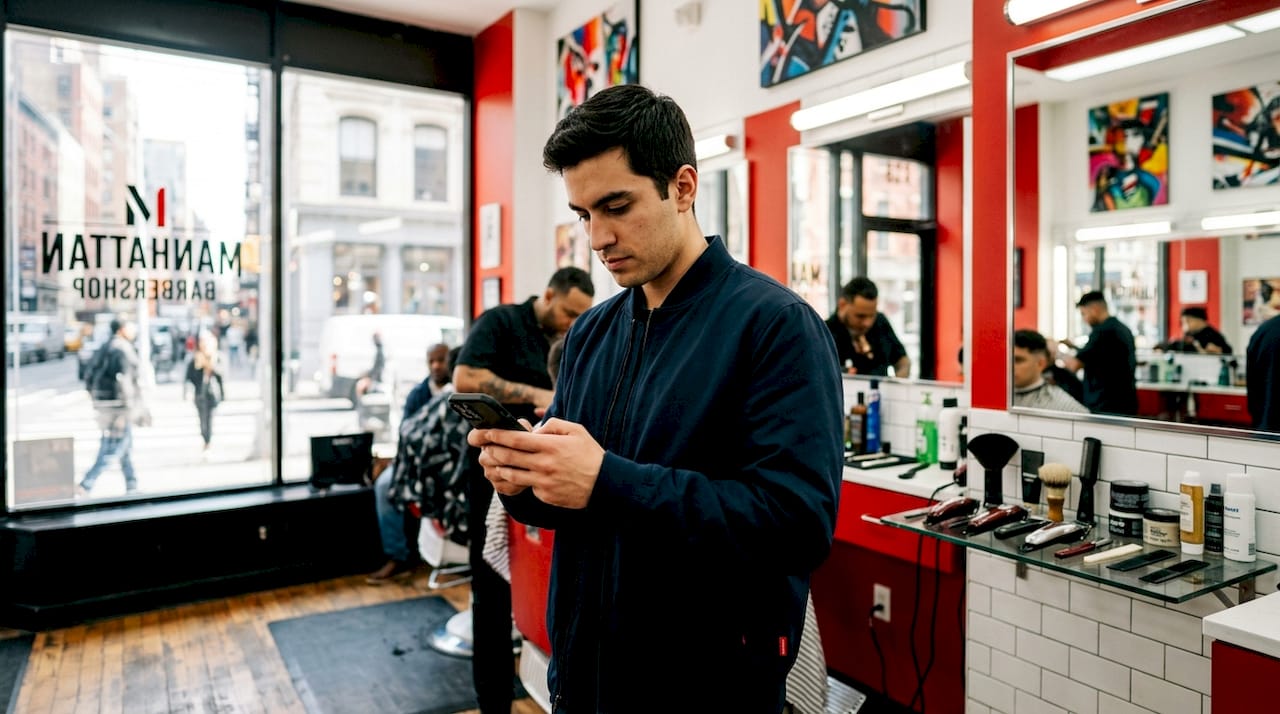
Documenting your preferred style for your barber is the single most reliable way to get a consistent, satisfying haircut every time you sit in the chair. The industry term for this practice is “client style documentation,” and it covers everything from reference photos and clipper guard numbers to product notes and maintenance intervals. Loyal clients spend approximately 67% more than first-time visitors, and clear style documentation is a primary driver of that retention. Manhattanbarbershopny builds this practice into every appointment, treating each client’s preferences as a living record that improves with every visit.
What essential information should you record for your haircut style?
The foundation of any good barber style documentation system is specificity. Vague requests like “clean it up” or “take a little off” are the leading cause of haircut disappointment. The more concrete your notes, the less room there is for misinterpretation.
Reference photos: front, side, and back
Using 2–3 reference photos showing front, side, and back views gives your barber a complete picture that no verbal description can match. A single photo from the front tells your barber almost nothing about the taper on the sides or the neckline shape in the back. Collect photos that each isolate one element: one for the fade level, one for the top length, and one for the neckline finish.
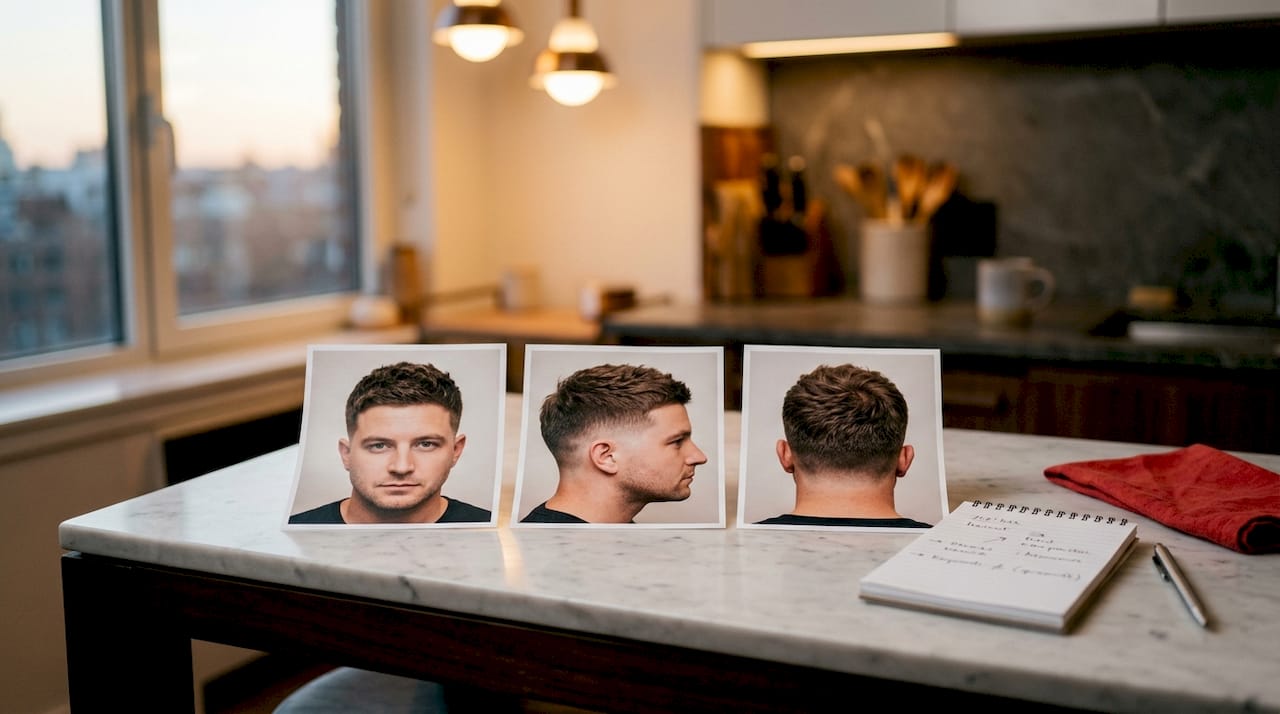
Pro Tip: Save your reference photos in a dedicated folder on your phone labeled with the date and style name. You will thank yourself six months later when you want to revisit a look.
Technical details to write down
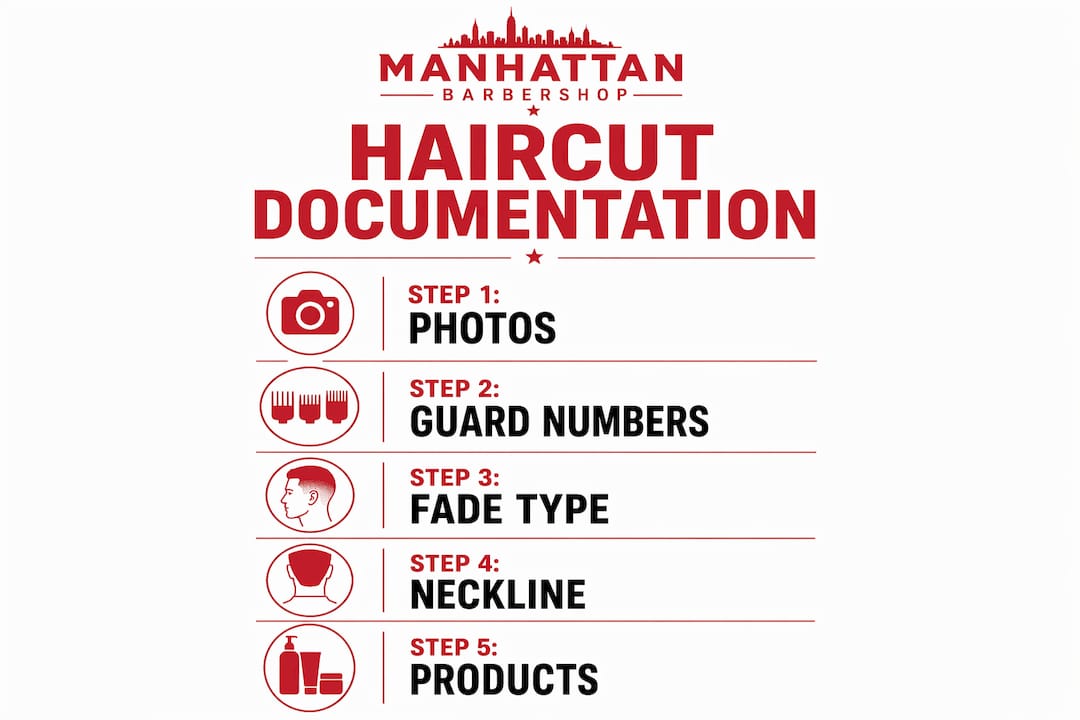
Record these specifics after every haircut:
Clipper guard numbers for each section (sides, back, blend zone)
Top length anchored to a physical reference. Describing length using body landmarks like “one finger width above the ear” reduces misunderstanding far better than “short on the sides”
Fade type: skin fade, low fade, mid fade, or high fade
Taper style: hard part, natural taper, or blended
Neckline shape: squared, rounded, or tapered
Texture treatment: scissor-over-comb, razor work, or point cutting
Products applied and the hold level achieved
Maintenance interval: professional barber standards recommend scheduling a follow-up around three weeks for popular fades to keep the shape clean
This table format works well as a note in your phone or a printed card you hand to a new barber.
How do you build a personal style documentation system?
A documentation system does not need to be complicated. The goal is to capture the right information at the right moment and make it easy to retrieve before your next appointment.
Take a selfie immediately after the cut. A post-haircut selfie taken inside the barbershop accounts for your individual hair texture, growth patterns, and face shape in a way that no celebrity photo can. Shoot from the front, both sides, and the back before you leave the chair.
Create a dedicated digital folder. Use your phone’s native photo app or a notes app to store photos alongside written details. Label each entry with the date and the barber’s name so you can track what changed over time.
Note what you disliked, not just what you liked. Highlighting dislikes in reference photos gives your barber clearer direction than asking for an exact replica. Write one line like “I liked the fade height but the top felt too heavy.”
Record the feeling you wanted. Beyond technical specs, note whether you were going for a confident, polished look or something more relaxed and effortless. Communicating the feeling you want leads to more personalized results than chasing a photo alone.
Update after every visit. Spend two minutes after each appointment adding a short note. Mark what changed, what stayed the same, and what you want to try next time.
Pro Tip: If you switch barbers or travel, your documentation folder becomes your portable style passport. A new barber can get up to speed in under a minute with a dated photo and a guard number list.
Understanding how hair texture influences your cut is worth adding to your notes. Coarse hair and fine hair behave differently at the same guard number, and knowing your texture type helps you set realistic expectations.
What barber communication techniques improve how your style is interpreted?
Good documentation only works if you communicate it well. The way you present your notes and photos at the chair determines whether your barber interprets them correctly.
Use guard numbers, not adjectives. The word “short” means something different to every barber. Saying “number two on the sides, number four on top, blended with scissors” removes all ambiguity. The term “trim” is widely misunderstood, so always specify whether you want a maintenance cut that holds the current shape or a growth-phase trim that takes off more length.
State your phase clearly. Are you maintaining a style or growing toward a new one? These two goals require completely different cutting techniques. A barber who thinks you want maintenance will not take the length needed to transition you to a longer style.
Share both sides of your photos. Show your barber what you like and what you want to avoid. Point to the neckline in one photo and say “I want this shape” and then point to the top in another and say “I do not want this much volume.” Using multiple photos for length, fade, and neckline separately produces clearer results than a single inspiration image.
Ask your barber how a style will behave with your specific hair type before committing
Confirm whether the look requires daily styling or works air-dried
Discuss which products are needed and how much time the routine takes
Asking how a cut looks air-dried versus blow-dried leads to styles that are genuinely maintainable at home, not just great in the chair. Learning to describe your fade style precisely before you sit down cuts consultation time in half and reduces the chance of a miscommunication.
Pro Tip: Before your appointment, rehearse your request out loud. If you cannot say it clearly in 30 seconds, your documentation needs more detail.
How do you troubleshoot and adjust your documentation after a haircut?
The best style documentation is a living record, not a one-time snapshot. Every haircut gives you new data to work with.
Write post-haircut notes within 24 hours. Memory fades fast. Note what exceeded expectations, what fell short, and what you would change. Be specific: “The fade was too high, starting at the temple instead of just above the ear.”
Photograph the result in natural light. Barbershop lighting flatters almost every cut. A photo in daylight shows you the true texture, density, and shape you are working with.
Identify the communication gap. If the result missed the mark, ask yourself whether the issue was in your documentation, your verbal explanation, or the barber’s interpretation. Each has a different fix.
Update your reference folder before the next visit. Replace outdated photos with current ones. Add a note explaining what you want adjusted and why. This turns a disappointing cut into useful data rather than a frustrating memory.
Build an honest feedback loop. Tell your barber directly what worked and what did not. A signature style is built through consistent consultation and client input, not through silent trial and error. A good barber welcomes this feedback because it makes their job easier and your results better.
Knowing the right questions to ask a new barbershop before you sit down also helps you gauge whether the barber has the experience to execute your documented style accurately.
Key Takeaways
Consistent, satisfying haircuts require specific written records, dated photos, and clear verbal communication delivered together at every appointment.
Point | Details |
Use multiple reference photos | Capture front, side, and back angles separately for complete style clarity. |
Record technical specs | Write down guard numbers, fade type, neckline shape, and products after every cut. |
Take a post-cut selfie | A photo taken immediately after the cut is your most accurate personal reference. |
Communicate dislikes too | Telling your barber what to avoid produces better results than showing one photo alone. |
Update notes every visit | Treat documentation as a living record that improves with each appointment. |
Why I think most men are leaving money on the table at the barber
Most men walk into a barbershop with a vague idea and walk out hoping for the best. I have seen this pattern repeat itself hundreds of times, and the result is always the same: a decent cut that could have been a great one.
The uncomfortable truth is that barbers are not mind readers. Even the most skilled craftsman needs raw material to work with. When you show up with dated photos, specific guard numbers, and a clear note on what you want to change from last time, you are not being high-maintenance. You are making the barber’s job easier and your own result better.
What surprises most men is how quickly a documented style becomes a signature look. After two or three visits with solid notes, a good barber stops needing the photos at all. They know your hair. They know your preferences. The consultation becomes a quick confirmation rather than a guessing game. That is the real payoff of building a personalized barbershop experience over time.
My honest advice: start small. After your next haircut, take three photos and write five bullet points. That is your entire system for the first visit. Refine it from there. The men who get the best haircuts are not the ones with the most style knowledge. They are the ones who show up prepared.
— Evgenii
How Manhattanbarbershopny helps you get the cut right every time
At Manhattanbarbershopny, every client’s preferences are treated as a record worth keeping. Eugene Solod and the team specialize in clean fades, classic cuts, and natural looks that hold their shape for weeks without heavy product use. The barbers here take the time to understand your hair type, growth patterns, and styling routine before picking up a clipper.
Whether you are booking your first visit or returning for a mod cut appointment, you can bring your documentation folder and expect a barber who knows how to use it. Walk-ins are welcome, and online booking is available for clients who want to lock in their preferred time. Your documented style deserves a barber who takes it seriously.
FAQ
What is client style documentation for a barber?
Client style documentation is a personal record of your haircut preferences, including reference photos, clipper guard numbers, fade type, neckline shape, and product notes. It gives your barber the specific information needed to replicate your preferred style consistently.
How many reference photos should I bring to the barber?
Bring 2–3 photos showing front, side, and back views for the most complete reference. Using separate photos for the fade, top length, and neckline produces clearer results than relying on a single image.
How often should I update my barber style documentation?
Update your notes and photos within 24 hours of every haircut. Recording what worked and what missed while the details are fresh makes each subsequent visit more accurate.
What technical details matter most for documenting a haircut?
Guard numbers for each section, fade type, neckline shape, and the products used are the four most critical details. Professional barber standards also recommend noting your maintenance interval, typically around three weeks for fades.
Why should I document what I dislike about a haircut?
Noting dislikes gives your barber clearer direction than a photo alone. Pointing out what to avoid removes ambiguity and helps your barber adapt a reference style to your specific hair type and face shape.
Recommended
Comments