Reading Barbershop Reviews Effectively: A Practical Guide


Reading barbershop reviews effectively means filtering for recency, review volume, and service-specific details to find barbers who can actually deliver what you need. Most people glance at a star rating and book. That approach misses the signals that separate a genuinely skilled barber from one who photographs well. Barbershops with 100–300+ reviews and combined rating scores of 85–100 are considered very strong options. That benchmark exists because volume reduces the distortion that a handful of enthusiastic friends can create. This guide gives you a structured way to decode what reviews actually say about a shop.
What key metrics indicate a trustworthy barbershop?
The first number to check is review volume, not star rating. A barber with 4.8 stars and 200+ reviews is statistically more reliable than one with a perfect 5.0 built on fewer than 10 reviews. Larger volume reduces the impact of outliers and personal bias, giving you a truer picture of what most clients experience.
Review volume tiers give you a quick read on credibility. Shops with 0–20 reviews are low-signal. Shops with 21–50 are moderate. Shops with 51–100 are high. Shops with 101–300 are very high, and shops with 300 or more represent elite consistency. Use these tiers as a filter before you read a single written review.
Star ratings need context, not just a number. A shop sitting at 4.6 with 400 reviews tells you more than a 5.0 with 8 reviews. The 4.6 shop has been tested by hundreds of clients across different hair types, barbers, and days of the week. That breadth of experience is what you want before you sit in the chair.

Recency matters just as much as volume. Reviews from the last 3 months are the most reliable because ownership and staff changes directly affect service quality. A shop that earned its reputation two years ago under a different head barber may be a completely different experience today.
Point | Details |
Review volume tier | Shops with 101–300+ reviews carry the most reliable signal for consistent service. |
Star rating threshold | Combined scores of 85–100 across platforms indicate a very strong barbershop option. |
Recency window | Prioritize reviews posted within the last 3 months to account for staff or ownership changes. |
Volume beats perfection | A 4.8 rating with 200+ reviews outperforms a 5.0 with fewer than 10 reviews in reliability. |
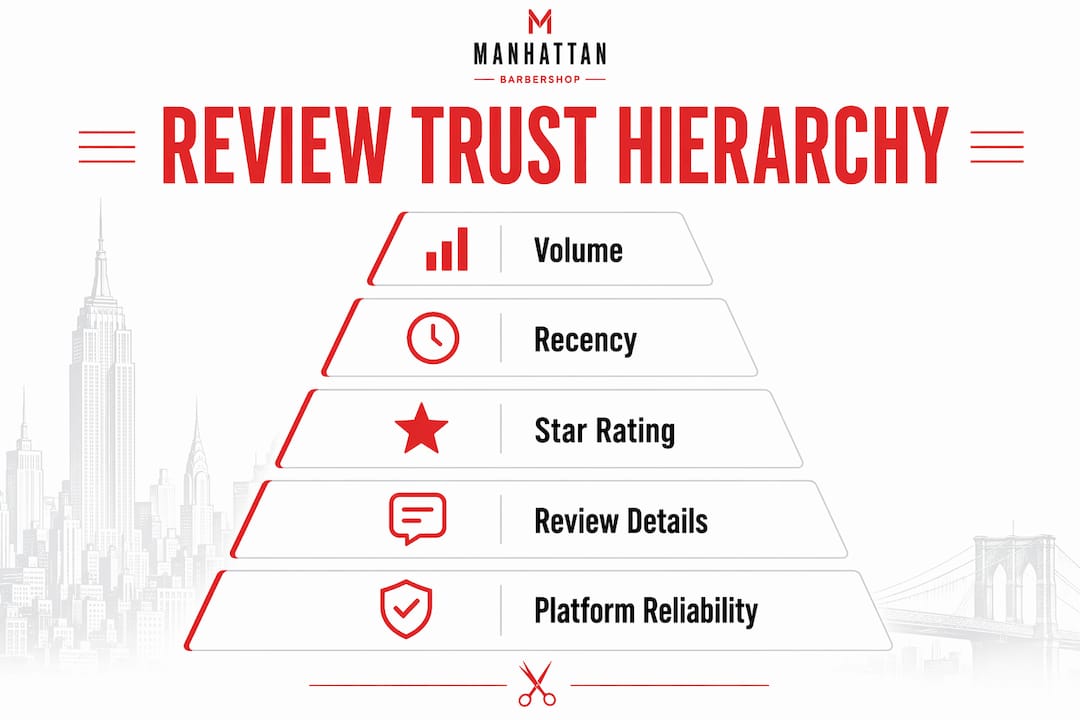
Pro Tip: Sort reviews by “Most Recent” before reading. Most platforms default to “Most Relevant,” which can surface older reviews that no longer reflect the current team.
How do you spot meaningful patterns in written reviews?
Star ratings tell you the score. Written reviews tell you the story. The most useful signal in any written review is repetition. When 3–5 reviews cite similar issues like rushed cuts, uneven fades, or poor consultation, that pattern is a reliable indicator of a real service problem. One complaint is an outlier. Three complaints about the same thing is a trend.
Look for these specific signals in written feedback:
Consultation quality: Does the reviewer mention that the barber asked questions about their hair type, lifestyle, or preferred style? Barbers who consult before cutting produce better results.
Fade and line precision: Phrases like “clean fade,” “sharp lines,” or “held its shape for weeks” point to technical skill. Vague praise like “great cut” tells you almost nothing.
Communication and timing: Reviews that mention the barber explained what they were doing, or finished on time without rushing, signal professionalism.
Repeat visits: A reviewer who mentions returning three or four times carries more weight than a first-time visitor. Loyalty is the strongest endorsement.
Generic or suspiciously perfect reviews: Short reviews with no specific details, like “Amazing! Best barber ever!” often reflect bias or incentivized feedback. Discount them.
Management responsiveness is a signal most people ignore. Barbershops that respond constructively to critical reviews show a commitment to improving client experience. A defensive reply or no reply at all often signals that the shop does not take feedback seriously. Check the owner responses on your top two or three negative reviews before booking.
“Read reviews as a pattern, not a verdict. One bad review means nothing. Five reviews all mentioning the same rushed service means everything. The pattern is the data.”
Understanding what distinguishes great barber skills helps you recognize which review details actually matter. A reviewer praising “attention to detail” is more credible when you know what detail-oriented barbering actually looks like in practice.
Which platforms give you the most reliable barbershop reviews?
Not all review platforms carry equal weight. Google Reviews is the most useful starting point because it has the highest volume of unfiltered feedback and is harder to game than niche directories. Yelp adds value because its algorithm actively filters reviews it suspects are fake or solicited, which makes the remaining reviews slightly more trustworthy on average.
Booking apps like Booksy and StyleSeat offer a different kind of signal. Reviews on these platforms come only from verified clients who actually booked and showed up. That verification removes a layer of noise you find on open platforms.
Here is a practical sequence for evaluating a new barbershop online:
Check Google Reviews first. Look at total volume, average rating, and sort by recency. Read the 10 most recent reviews in full.
Cross-reference on Yelp. If the shop has a strong Google presence but weak Yelp reviews, investigate why. The gap often reveals something.
Look at photos posted by clients. Client photos show real results on real hair. Shop photos are marketing. Client photos are evidence.
Check the booking system. A professional booking system like Booksy or an integrated online calendar correlates with good shop management. “DM me to book” often signals disorganization and unreliable appointments.
Review the shop’s social media. Recent posts showing actual haircuts, not just promotional graphics, confirm the shop is active and proud of its current work.
Pro Tip: If a shop has strong reviews but no client photos, ask to see a portfolio before booking. Any skilled barber will have one ready.
Finding trustworthy barbershop reviews also means knowing what recurring themes in feedback actually reflect about a shop’s service standards. The themes that appear across platforms carry the most weight.
What steps should you take when trying a new barber?
The smartest first visit is a low-stakes one. Starting with a trim or cleanup rather than a dramatic style change lets you evaluate the barber’s communication, hygiene, and technical skill without risking a look you have to live with for weeks. Think of it as a test drive, not a commitment.
During the visit, pay attention to these factors:
The consultation: Does the barber ask what you want before picking up the clippers? A barber who starts cutting without asking questions is a red flag.
Shop cleanliness: Clean stations, sanitized tools, and fresh cape cloths are non-negotiable hygiene standards. If the station looks chaotic, the cut often reflects it.
Attention during the cut: Is the barber focused on your hair, or distracted by conversations across the room? Focused barbers produce better results.
The finish: Does the barber check the cut from multiple angles before calling it done? That final review step separates thorough barbers from fast ones.
Your honest reaction: Not just “does it look good right now” but “do I feel heard?” A barber who listened and delivered is worth returning to.
Reviews read as patterns rather than absolute verdicts lead to better appointment predictions. Your trial visit is where you confirm or challenge what the reviews told you. If the visit matches the positive patterns you read about, you have found your barber. If it contradicts them, trust your experience over the rating.
Knowing the right questions to ask a new barbershop before you sit down can make the trial visit even more productive. A few direct questions reveal a lot about how a shop operates.
Key Takeaways
Reading barbershop reviews effectively requires checking volume, recency, and written patterns together. No single metric tells the full story on its own.
Point | Details |
Volume over perfection | A 4.8 rating with 200+ reviews is more reliable than a 5.0 with fewer than 10. |
Recency window | Reviews from the last 3 months reflect current staff and service quality most accurately. |
Pattern recognition | Three or more reviews citing the same issue signal a real, recurring service problem. |
Platform cross-check | Compare Google Reviews and Yelp, then verify with client photos and booking system quality. |
Trial visit strategy | Book a conservative cut first to evaluate communication, hygiene, and technical skill with low risk. |
What I’ve learned about reviews that most guides won’t tell you
After spending years paying attention to how people choose barbers, I’ve noticed one consistent mistake: treating a star rating like a guarantee. A 4.9 rating means the barber is popular. It does not mean the barber is right for your hair.
Perfect star ratings can mislead when the barber’s specialty does not match your hair type or style preferences. A barber who excels at textured fades may produce mediocre results on fine, straight hair, and the reviews will not tell you that directly. You have to read between the lines. Look for reviews from clients whose hair sounds like yours.
Consistency and personalized consultations outweigh generic high-volume positive feedback for long-term satisfaction. The barber who asks three questions before touching your hair will serve you better over time than the one who delivers a technically clean cut without ever learning what you actually want. Reviews that mention consultation quality are the ones worth weighting most heavily.
The best review signal I’ve found is the repeat client. When someone writes “I’ve been coming here for two years and every cut is consistent,” that sentence contains more information than fifty five-star ratings from first-time visitors. Consistency builds better style over time, and the reviews that confirm consistency are the ones that should drive your decision.
— Evgenii
Manhattanbarbershopny: where reviews meet real results
Manhattanbarbershopny on the Upper East Side has built its reputation through exactly the kind of client feedback this article describes. Detailed reviews, repeat clients, and consistent praise for consultation quality and clean fades reflect a shop that takes individual grooming needs seriously.

Eugene Solod and his team specialize in tailored cuts that hold their shape for weeks, with no excessive product use and no rushed service. Every client gets a consultation before the clippers come out. You can book your appointment online in minutes, or walk in for a regular haircut on the Upper East Side. Put your review-reading skills to work and see the difference a well-reviewed, genuinely skilled barbershop makes.
FAQ
How many reviews should a barbershop have to be trustworthy?
Barbershops with 100–300+ reviews are considered very strong options. Shops with fewer than 20 reviews carry too little signal to be reliable.
What review platforms are best for evaluating barbershops?
Google Reviews offers the highest volume of unfiltered feedback. Booking apps like Booksy and StyleSeat add value because reviews come only from verified clients who actually visited.
How recent should barbershop reviews be?
Reviews from the last 3 months are the most reliable. Staff and ownership changes can significantly affect service quality, making older reviews less predictive.
What makes a written review more credible than others?
Reviews that mention specific details like consultation quality, fade precision, or repeat visits carry more weight than vague praise. Repeat-client reviews are the strongest endorsement.
Should I trust a barbershop with a perfect 5-star rating?
A 5-star rating with fewer than 10 reviews is less reliable than a 4.8 rating with 200+ reviews. High volume reduces bias and gives a more accurate picture of consistent service quality.
Recommended
Comments