Local Barbershop Atmosphere: What Really Matters

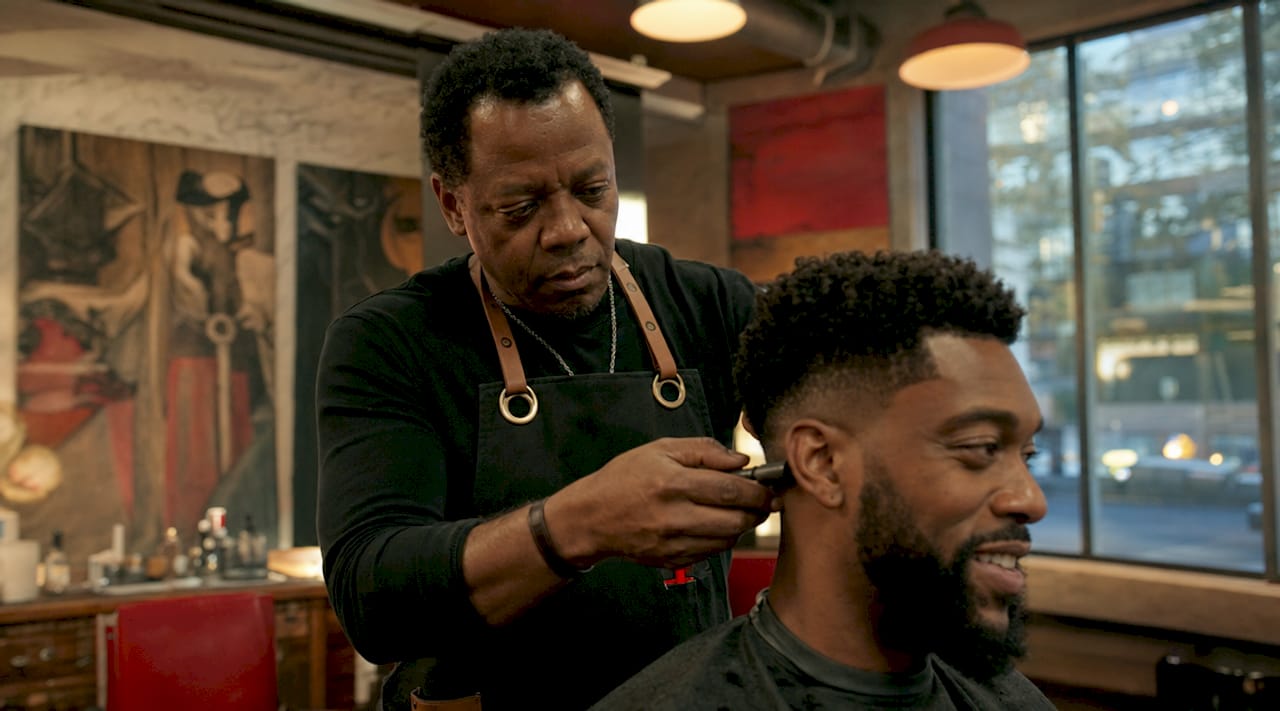
A local barbershop’s atmosphere is defined by its sensory environment, consistent staff relationships, and community feel working together as one integrated system. These three forces shape whether a client leaves feeling genuinely refreshed or simply groomed. Research in 2025 and 2026 confirms that the physical environment and social dynamics of a barbershop directly drive satisfaction, loyalty, and word-of-mouth recommendations. Understanding local barbershop atmosphere what matters most gives you the tools to recognize a great shop or build one. The concept professionals use for this is “servicescape,” and it covers everything from lighting to the way a barber greets you by name.
What sensory elements shape barbershop atmosphere and customer emotions?
Barbershop atmosphere, explained through the lens of servicescape theory, starts with what your senses register the moment you walk through the door. Lighting, music, scent, temperature, and spatial layout are not decorative choices. They are functional signals that tell your nervous system whether to relax or stay guarded.
A 2025 MDPI study found that servicescape effects on satisfaction registered a coefficient of β=0.816 (p<0.001), meaning the physical environment is one of the strongest predictors of whether a client leaves happy. That number tells you atmosphere is not a soft benefit. It is a measurable driver of business outcomes.
A separate 2026 peer-reviewed study confirmed that music, scent, and crowding causally affect atmosphere perception, satisfaction, and the likelihood of returning or recommending the shop. When a barbershop plays music at the right volume, not so loud it kills conversation and not so quiet it creates awkward silence, clients stay longer and feel more at ease. Scent works the same way. A clean, subtly barbered smell signals professionalism without being clinical.
Crowding matters more than most people realize. A shop that feels packed and rushed triggers stress, even if the haircut itself is excellent. Spatial layout that gives each client a sense of personal space communicates respect before a single word is spoken.
Here is what to notice when you walk into a new shop:
Lighting: Warm, even light signals comfort. Harsh overhead fluorescents signal a transactional, in-and-out experience.
Music: Genre and volume should match the shop’s identity. Consistent, moderate-volume music improves mood without dominating.
Scent: Clean and subtly grooming-adjacent. Overpowering cologne or chemical smells reduce comfort.
Temperature: Slightly cool is better than warm. Warmth creates drowsiness; cool keeps clients alert and comfortable.
Spatial flow: Clear sightlines, organized stations, and enough room between chairs signal a well-run operation.
A 2025 Consumer Behavior Review study with 683 respondents confirmed that sensory cues increase dwell time through emotional mediation. Clients who feel good in a space stay longer, spend more, and come back sooner.
Pro Tip: When visiting a barbershop for the first time, spend 60 seconds in the waiting area before committing. Notice how you feel physically. If you are already relaxing, the sensory environment is doing its job.
How do community and relationships build a welcoming barbershop vibe?
The sensory environment gets clients through the door. The social environment is what makes them return for years. This is where the concept of the “third place” becomes relevant. Sociologist Ray Oldenburg defined third places as social environments outside home and work where people gather, belong, and decompress. A great barbershop is one of the last genuine third places left in most neighborhoods.
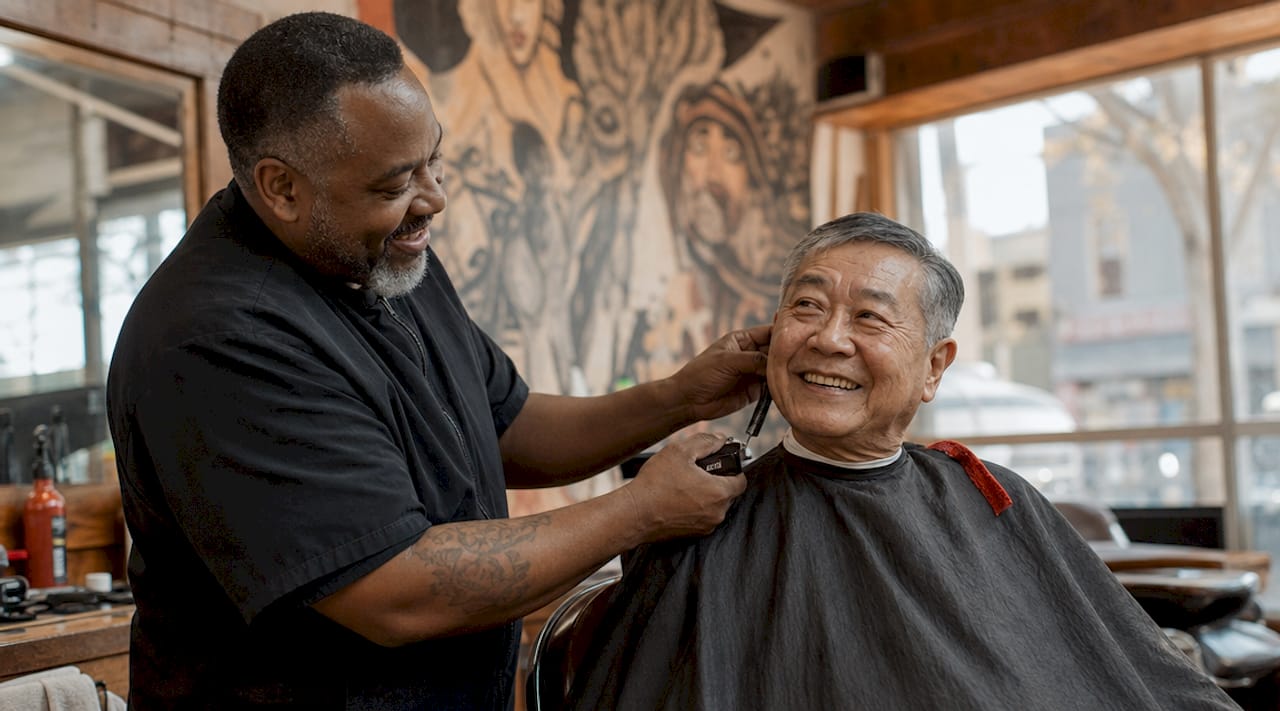
University of Alaska Anchorage research from 2026 documents how barbershops serve as trusted spaces where clients feel safe to speak openly, with barbers functioning as mentors and trusted confidants across racial and social lines. This is not a niche finding. It reflects a dynamic that plays out in barbershops across every demographic. When a barber remembers your name, your last cut, and the fact that you were nervous about a job interview, that is not small talk. That is the foundation of loyalty.
The Pulse Knowledge Library 2026 shows that shops with stable, consistent teams earn higher rebooking rates and stronger reviews than shops with high staff turnover. Clients do not just return to a shop. They return to a specific barber. When that barber leaves, the client often follows.
“Welcome in community-rooted barbershops means psychological safety and recognition over time, not just casual friendliness.”
Inclusivity is a practical concern, not just a values statement. Women and non-binary clients who visit barbershops often report that the social atmosphere is the deciding factor in whether they return. A shop that defaults to gendered assumptions, or where staff visibly hesitates when a woman sits down, loses that client permanently. The most successful shops build what researchers call choice architecture: an environment where clients can choose to chat or stay quiet without social pressure in either direction.
Signs of genuine community engagement in a shop include:
Staff who greet returning clients by name without checking a booking system
A waiting area where clients talk to each other naturally, not just scroll their phones
Local artwork, neighborhood references, or community event notices on the walls
Barbers who ask follow-up questions from previous visits without being prompted
A mix of client ages, backgrounds, and genders that reflects the actual neighborhood
Pro Tip: Ask the barber how long they have worked at the shop. Tenure is one of the clearest signals of a stable, community-rooted team. A barber who has been there three or more years is a strong indicator of a shop worth committing to.
What practical steps create or enhance a welcoming barbershop atmosphere?
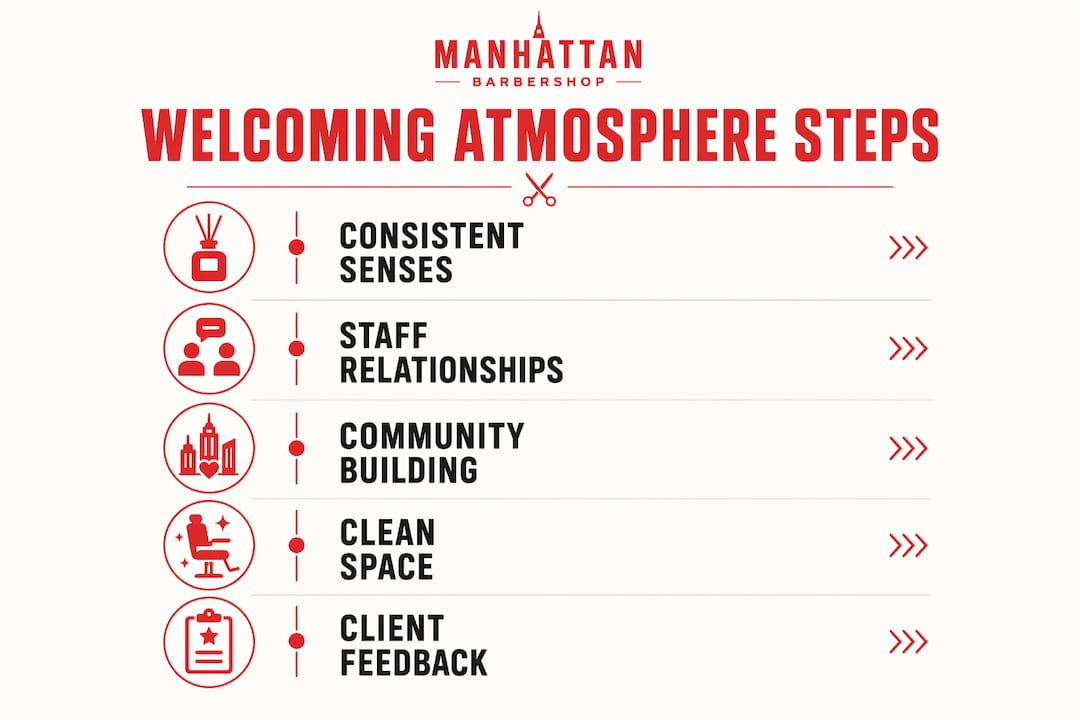
Building a great atmosphere is not a one-time design decision. It requires ongoing operational choices that signal respect for the client’s time, comfort, and individuality. For shop owners, these steps are the difference between a transactional business and a neighborhood institution. For clients, knowing these markers helps you identify shops worth your loyalty.
Calibrate sensory elements deliberately. Choose music, lighting, and scent as a package, not independently. Each element should reinforce the same emotional tone. A classic barbershop aesthetic with hip-hop at concert volume creates cognitive dissonance that clients feel without being able to name it.
Manage appointment timing with precision. Appointment punctuality and non-rushed flow signal respect more powerfully than any décor upgrade. A client who waits 20 minutes past their appointment time has already decided the shop does not value them.
Build social flexibility into the experience. Train staff to read whether a client wants conversation or quiet. Neither preference should feel awkward. The best shops make silence as comfortable as conversation.
Invest in staff retention. Barber retention and consistent teams are central to creating loyal client bases. Competitive pay, a respectful work culture, and clear career paths keep good barbers in place.
Engage the neighborhood beyond the chair. Host community events, support local causes, or simply know the names of the business owners next door. Shops that are woven into the fabric of their block earn a reputation that no advertising budget can replicate.
Approach | Expected impact |
Consistent sensory environment | Increases dwell time and emotional comfort on first visit |
Stable barber team | Drives rebooking rates and long-term client loyalty |
Social flexibility (talk or quiet) | Reduces first-visit anxiety, especially for new or diverse clients |
Punctual, unrushed appointments | Signals respect and elevates overall satisfaction scores |
Community engagement | Builds organic referrals and neighborhood reputation |
Pro Tip: If you own or manage a barbershop, audit your waiting area separately from your service area. Clients form their first impression before they sit in the chair. A comfortable, well-designed waiting space sets the emotional baseline for the entire visit.
How do different barbershop atmospheres serve diverse client needs?
Not every barbershop should feel the same, and that is a feature, not a flaw. Understanding the types of barbershop atmospheres explained across the industry helps both clients and owners make better decisions about fit.
The three most common atmosphere types are:
Fast in-and-out shops: Prioritize speed and efficiency. Minimal décor, high turnover, competitive pricing. These work well for clients who know exactly what they want and value convenience over connection. The risk is that sensory and social elements are often neglected, which limits loyalty.
Premium ritual shops: Treat the haircut as an experience with hot towels, detailed consultations, and curated environments. These shops attract clients who see grooming as self-care. The atmosphere is deliberate and immersive, and pricing reflects that investment.
Community hub shops: The third-place model in its fullest form. These shops are neighborhood anchors where the same faces appear week after week. The atmosphere is relaxed, socially flexible, and deeply local. This model generates the strongest loyalty and the highest referral rates.
For women and mixed-gender clients, the relaxed barbershop environment matters in a specific way. Research on choice architecture in barbershops shows that removing social pressure, whether to conform to gender norms or to engage in conversation, is the single most effective way to make a shop feel welcoming to a broader audience. A shop that signals “you belong here regardless” through its behavior, not just its signage, earns clients who become advocates.
When selecting a shop that fits your preferences, consider these factors:
Does the atmosphere match the pace you want? Fast and efficient, or slow and social?
Do the barbers acknowledge you without making assumptions about what you want?
Is the sensory environment one you could spend 45 minutes in comfortably?
Do you see clients who look like you, or is the shop clearly built for one demographic?
Does the shop’s community reputation align with what you value in a local business?
Key takeaways
A welcoming local barbershop atmosphere requires sensory calibration, consistent staff relationships, and genuine community integration working together as one system.
Point | Details |
Servicescape drives satisfaction | Physical environment factors like lighting, music, and scent directly predict client satisfaction and loyalty. |
Third-place social dynamics | Shops that function as community hubs generate stronger rebooking rates and organic referrals than transactional shops. |
Staff consistency is non-negotiable | Clients return to specific barbers, not just shops. Stable teams are the foundation of long-term loyalty. |
Social flexibility wins diverse clients | Allowing clients to talk or stay quiet without pressure is the most effective inclusivity strategy. |
Punctuality signals respect | Unrushed, on-time appointments communicate care more clearly than any aesthetic upgrade. |
What I have learned about atmosphere that most people overlook
I have spent years paying attention to what separates a barbershop people love from one they merely tolerate. The honest answer is that décor is almost never the deciding factor. I have been in beautifully designed shops that felt cold and transactional, and I have been in shops with mismatched chairs and faded posters that felt like the most welcoming room in the neighborhood.
The difference is always care and consistency. A barber who remembers that you were growing out the top last time, who does not rush through the consultation to get to the next client, who makes you feel like your preferences actually matter. That is the atmosphere people describe when they say they love their barbershop. They are not describing the lighting. They are describing how the place made them feel.
The non-performative inclusive vibe is something I think about a lot. A shop that hangs a sign saying “everyone welcome” but where the staff visibly adjusts their behavior based on who walks in is not actually inclusive. Genuine inclusion shows up in the consistency of the welcome, not the marketing. The local barber experience that earns long-term loyalty is one where the quality of attention does not vary based on who you are or what you look like.
Modern barbershops are evolving, and that is a good thing. The best ones are figuring out how to hold onto the community-hub tradition while serving a broader, more diverse clientele. That balance is worth seeking out and worth supporting when you find it.
— Evgenii
Experience the Manhattanbarbershopny difference for yourself
If this article has clarified what you are looking for in a local barbershop, Manhattanbarbershopny on the Upper East Side of New York City is worth your time. Eugene Solod and his team have built a shop around exactly the principles covered here: a relaxed, welcoming atmosphere, skilled craftsmanship, and the kind of personalized attention that makes every client feel like a regular from the first visit.
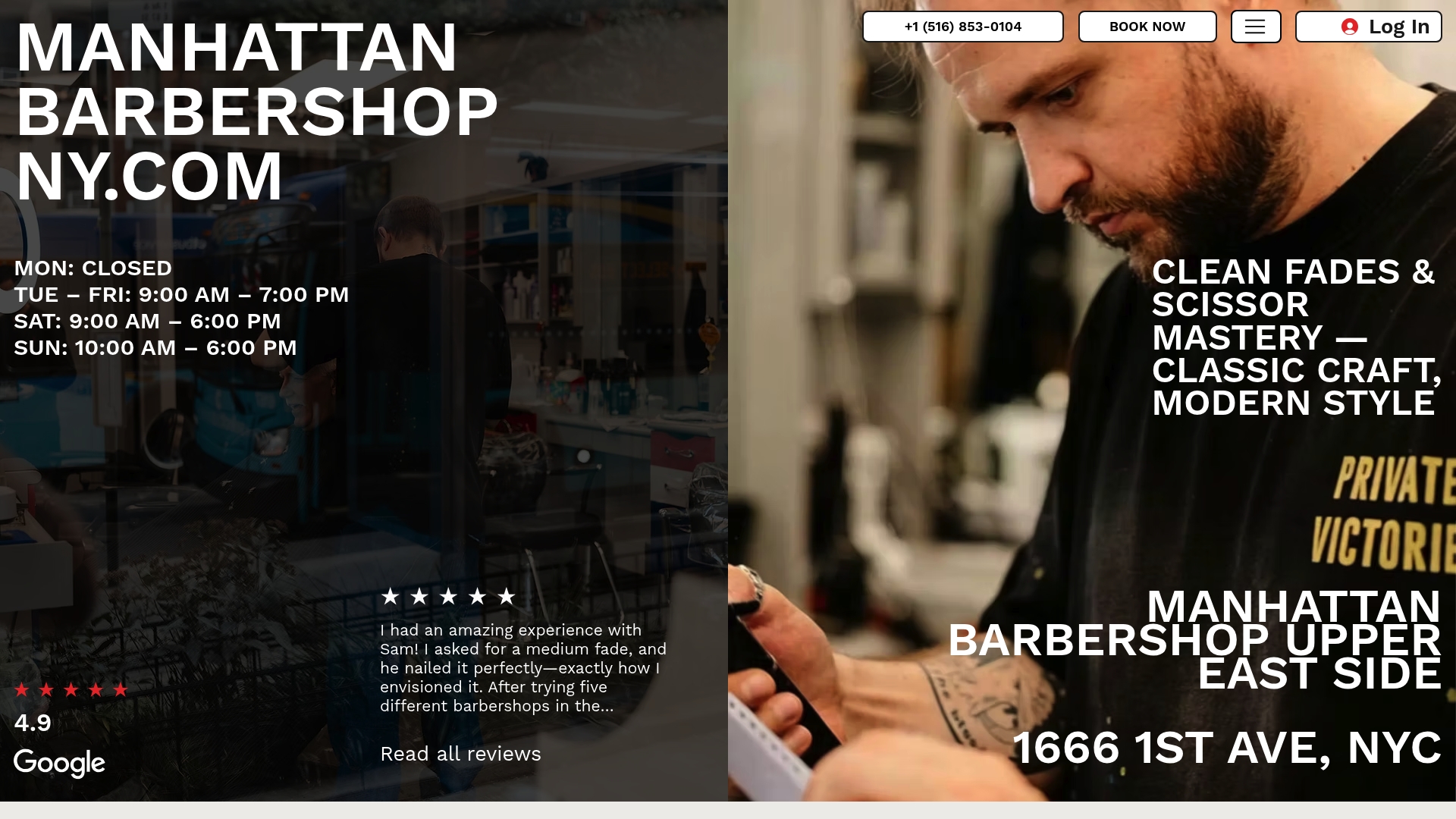
Whether you want a clean fade, a classic cut, or a style that works with your natural hair texture, the barbers at Manhattanbarbershopny take the time to understand what you actually need. Walk-ins are welcome, and online booking is available for those who prefer to plan ahead. You can also explore expert haircut services and see what a shop built on craft, comfort, and community looks like in practice.
FAQ
What is barbershop atmosphere and why does it matter?
Barbershop atmosphere is the combined effect of sensory elements like lighting, music, and scent alongside social dynamics like staff consistency and community connection. A 2025 MDPI study found that servicescape factors predict client satisfaction with a coefficient of β=0.816, making atmosphere one of the strongest drivers of loyalty and return visits.
What makes a barbershop feel like a community hub?
A barbershop becomes a community hub when it functions as a “third place,” a social space outside home and work where clients feel recognized and psychologically safe over time. Stable barber teams, local engagement, and social flexibility are the three operational factors that create this effect, according to 2026 Pulse Knowledge Library research.
How do sensory elements like music and scent affect my experience?
Music, scent, and crowding causally affect atmosphere perception and the likelihood of returning or recommending a shop, as confirmed by a 2026 peer-reviewed study. These cues work through emotional mediation, meaning they change how you feel, which then changes how you evaluate the entire visit.
How can women find a welcoming barbershop atmosphere?
Women and mixed-gender clients benefit most from shops that practice “choice architecture,” meaning the environment allows clients to talk or stay quiet without social pressure, and where staff behavior does not shift based on gender. Look for shops where the welcome is consistent regardless of who walks in, not just shops that advertise inclusivity.
What is the single most important signal of a great local barbershop?
Staff tenure is the clearest single signal. A barber who has worked at the same shop for three or more years indicates a stable team, a well-run operation, and a shop where clients feel valued enough to keep coming back. Everything else, décor, pricing, location, matters less than the consistency of the people behind the chair.
Recommended
Comments