How Barbers Read Hair Growth Patterns: 2026 Guide


Reading hair growth patterns is a diagnostic process where barbers map growth direction, density, cowlicks, and resistance before a single cut is made. Skilled barbers know how barbers read hair growth patterns determines every decision from blade angle to weight distribution. The industry term for this process is pre-cut hair analysis, and it separates haircuts that hold shape for weeks from ones that collapse after the first wash. At Manhattanbarbershopny, this diagnostic step is built into every appointment, because Eugene Solod’s approach treats the observation phase as the foundation of the entire cut.
How do barbers read hair growth patterns effectively?
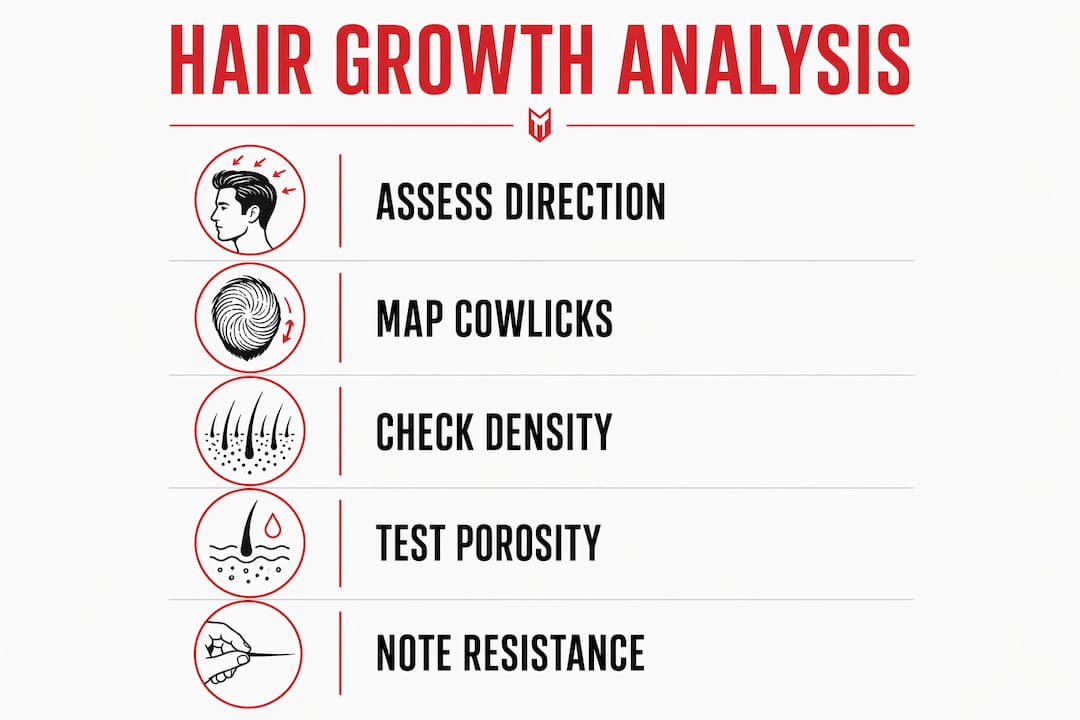
Pre-cut diagnostic assessment covers five core factors: growth direction, hair density, porosity, styling resistance, and client lifestyle. Each factor directly influences how the barber structures the cut and selects the right technique. Skipping any one of them creates a haircut that looks sharp in the chair but loses its shape within days.
Growth direction and cowlick mapping
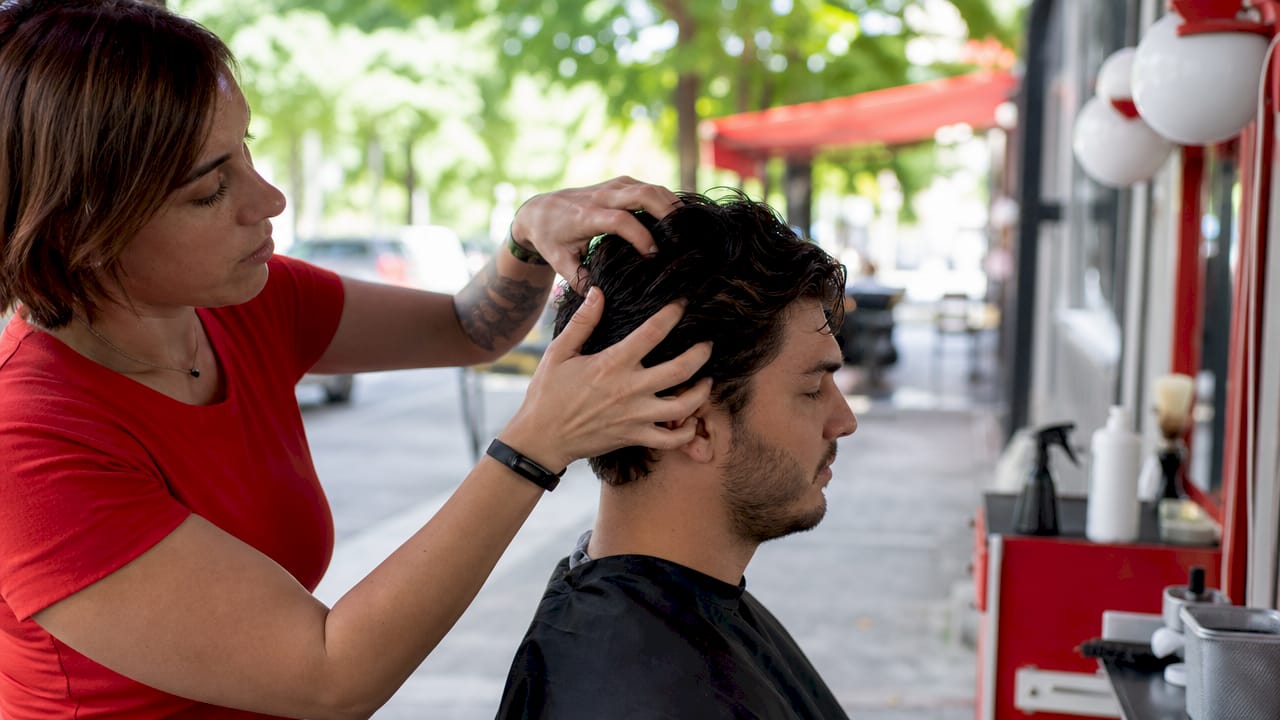
Growth direction is the first thing a barber reads. The barber runs fingers through dry hair from the nape to the crown, feeling for whorls, cowlicks, and directional shifts. A cowlick at the crown, for example, pushes hair outward in a circular pattern that fights any style trying to lay flat. Mapping these zones before cutting tells the barber exactly where to leave extra length and where to reduce weight.
Hair density, porosity, and resistance
Hair density determines how much weight the hair carries on its own. High-density hair tends to puff outward if weight is not removed from the right zones. Porosity affects how the hair responds to moisture, which changes how it behaves after washing. Barbers assess styling resistance using a finger-push test, pressing hair against its natural growth direction and measuring how strongly it springs back. Resistance levels range from low to extreme, and that rating directly controls how much length the barber must leave to keep the style intact.
Lifestyle and client goals
A client who air-dries and uses no product needs a cut that works with natural growth flow, not against it. A client who blow-dries daily has more flexibility because heat temporarily redirects growth. Barbers factor in client goals and habits during the consultation to build a cut that fits real daily life, not just the moment in the chair.
Pro Tip: Run your fingers through the client’s dry hair before wetting it. Wet hair masks natural growth direction and resistance, giving you a false read on how the style will actually behave.
How do barbers diagnose and manage challenging growth patterns?
Cowlicks and crown whorls are the most common problem zones in hair growth analysis. A systematic approach prevents the most common mistake: cutting too short in a resistance zone, which causes hair to stand up or separate permanently.
The five-step mapping process for stubborn growth areas works as follows:
Identify the growth origin point. Find the exact center of the whorl or cowlick by parting the hair in multiple directions until the natural pivot is clear.
Trace the growth radius. Follow the hair outward from the origin to see how far the directional influence extends. Crown whorls often affect a 3-inch radius.
Measure resistance. Apply the finger-push test at three points within the zone: the origin, midpoint, and outer edge. Resistance often varies across the zone.
Mark the safe cutting boundary. The point where resistance shifts from high to moderate is the minimum safe length. Cutting below this line causes the hair to stand or split.
Plan the blend. Decide how the resistant zone transitions into surrounding hair. A gradual fade works better than a hard line in most cowlick areas.
Growth zone | Common behavior | Recommended approach |
Crown whorl | Hair fans outward in a circle | Leave extra length, reduce weight at perimeter |
Nape cowlick | Hair grows upward against the neck | Cut with the grain, avoid clipper-over-comb against growth |
Hairline cowlick | Hair splits or points at the front | Use point-cutting to soften the split, not blunt lines |
Temple recession | Growth angles sharply downward | Follow the angle; forcing a straight line creates gaps |
Pro Tip: Never cut a cowlick zone dry on the first visit with a new client. Wet the hair, let it settle, and watch where it naturally falls. That tells you the true resting position, not the styled one.
Why is the pre-cut consultation critical for reading hair patterns?
The pre-cut consultation is the moment where barbers collect the data that makes the entire cut work. A structured 2-minute consultation script increases first-visit rebook rates from roughly 48% to 79%. That jump reflects something real: clients who feel heard and understood come back.
The most useful question a barber can ask is not “What do you want today?” It is “What did you want differently from your last cut?” That single question, as noted in professional consultation frameworks, uncovers individual hair growth quirks that no amount of visual inspection reveals. A client might say the sides always puff out by week two, which tells the barber exactly where the density and growth direction are fighting each other.
Clients who bring reference photos give barbers a concrete target to work toward. Bringing 2-3 reference photos and discussing texture, density, and growth patterns prevents unrealistic expectations before the cut starts. A barber who sees a photo of a style that requires straight growth on a client with a strong crown whorl can explain the constraint immediately, rather than delivering a disappointing result.
“The diagnostic conversation is not small talk. It is data collection. Every answer the client gives tells you something about how their hair grows and how they live with it.”
Barbers who explain growth constraints honestly build trust faster than those who simply execute the requested style without comment. Clients appreciate knowing why a certain style will or will not work for their specific growth pattern. That transparency is a core part of the barber consultation process at Manhattanbarbershopny.
How do growth patterns shape cutting technique and style longevity?
The difference between a haircut that lasts three weeks and one that falls apart in ten days is weight distribution. Weight distribution based on natural growth flow balances hair zones to prevent puffing and splitting after washing. This is not a finishing step. It is a structural decision made during the cut itself.
Barbers adjust weight in three key ways based on growth pattern reading:
Removing weight from high-density zones. Where hair grows thick and outward, thinning shears or point-cutting reduces bulk without shortening the overall length. This prevents the style from expanding as the hair grows.
Leaving weight in resistance zones. Where hair fights direction, extra length acts as a counterweight. Cutting too short removes the mass that holds the style in place.
Adjusting cutting angles to match natural flow. Cutting against the growth direction creates blunt lines that separate as the hair grows out. Cutting with or slightly across the growth direction produces a blend that stays clean longer.
Proactively identifying growth patterns and adjusting weight in zones where hair swirls or pushes outward is the critical distinction between cuts that maintain shape and those that collapse. This applies to classic taper fades, textured crops, and longer styles equally.
Product selection also connects directly to growth pattern reading. A client with a strong directional cowlick benefits from a light pomade or clay that reinforces the natural direction rather than fighting it. Recommending the wrong product for a specific growth pattern is one of the most common reasons clients report that a style “never looks right at home.”
Pro Tip: After completing the cut, show the client the growth zones you worked around and explain what product direction supports the natural flow. That 30-second explanation dramatically reduces the chance they come back frustrated.
Key takeaways
Reading hair growth patterns before cutting is the single skill that separates haircuts lasting days from those lasting weeks.
Point | Details |
Pre-cut analysis is non-negotiable | A 2-minute diagnostic read of growth direction, density, and resistance sets the entire cut’s structure. |
Resistance zones require extra length | Cutting too short in cowlick or whorl areas causes permanent standing or splitting. |
Consultation questions reveal hidden data | Asking what the client wanted differently last time uncovers growth quirks no visual check finds. |
Weight distribution controls longevity | Adjusting weight in swirl and outward-push zones prevents post-wash collapse as hair grows. |
Product advice must match growth direction | Recommending products that reinforce natural flow extends style life and improves client satisfaction. |
What I’ve learned from reading growth patterns every day
Most barbers underestimate how much information is sitting right in front of them before the cape goes on. I have watched barbers spend 30 minutes on a technically perfect fade, only to have it lose shape in a week because they never mapped the crown whorl. The cut was flawless. The diagnosis was skipped.
The observation phase is where the real work happens. When I sit a client down and run my hands through their dry hair, I am not warming up. I am reading a map. The direction the hair springs back, the density at the temples, the resistance at the nape — all of that tells me how the style will behave on day 14, not just day one. That 21-day behavior is what clients actually live with, and it is what they judge you on.
Clients also respond differently when you explain what you are doing. Telling someone “you have a strong clockwise whorl at the crown, so I am going to leave a little extra length there to keep it from standing up” takes ten seconds. It builds more trust than any amount of small talk. The questions barbers ask before sitting clients down matter as much as the technique that follows. Mastering both is what separates good barbers from ones clients return to for years.
— Evgenii
Precision cuts at Manhattanbarbershopny, Upper East Side
Manhattanbarbershopny applies the same diagnostic approach described in this guide to every client who walks through the door. Eugene Solod and the team read growth direction, density, and resistance before picking up a clipper, because that pre-cut analysis is what makes styles hold their shape for weeks, not days.

Walk-ins are welcome, and online booking is available for clients who want to schedule a full consultation. Whether you are coming in for a clean taper, a classic cut, or a first-time consultation, the barbers at Manhattanbarbershopny take the time to understand your specific growth patterns and build a cut that fits your hair and your life.
FAQ
What does a barber look for when reading hair growth patterns?
Barbers assess growth direction, cowlick placement, hair density, porosity, and styling resistance before cutting. These factors together determine blade angle, weight distribution, and how much length to leave in resistant zones.
How long does a pre-cut hair analysis take?
A structured pre-cut assessment typically takes about 2 minutes before cutting begins. That brief diagnostic step directly influences how well the style holds shape over the following weeks.
Why do cowlicks make haircuts harder to maintain?
Cowlicks push hair against the intended style direction, and cutting too short in those zones removes the length needed to hold the style in place. Barbers use a finger-push test to measure resistance and leave appropriate length to control the behavior.
How do reference photos help a barber read your hair?
Reference photos give the barber a target style to compare against your actual growth pattern. That comparison reveals immediately whether the desired style is achievable with your specific growth direction and density.
What is the finger-push test in barbering?
The finger-push test measures styling resistance by pressing hair against its natural growth direction and observing how strongly it springs back. Resistance levels range from low to extreme and directly determine how much length the barber must retain to keep the style intact.
Recommended
Comments