Barber Approved Burst Fade: 2–4 Week Care at Manhattan Shop

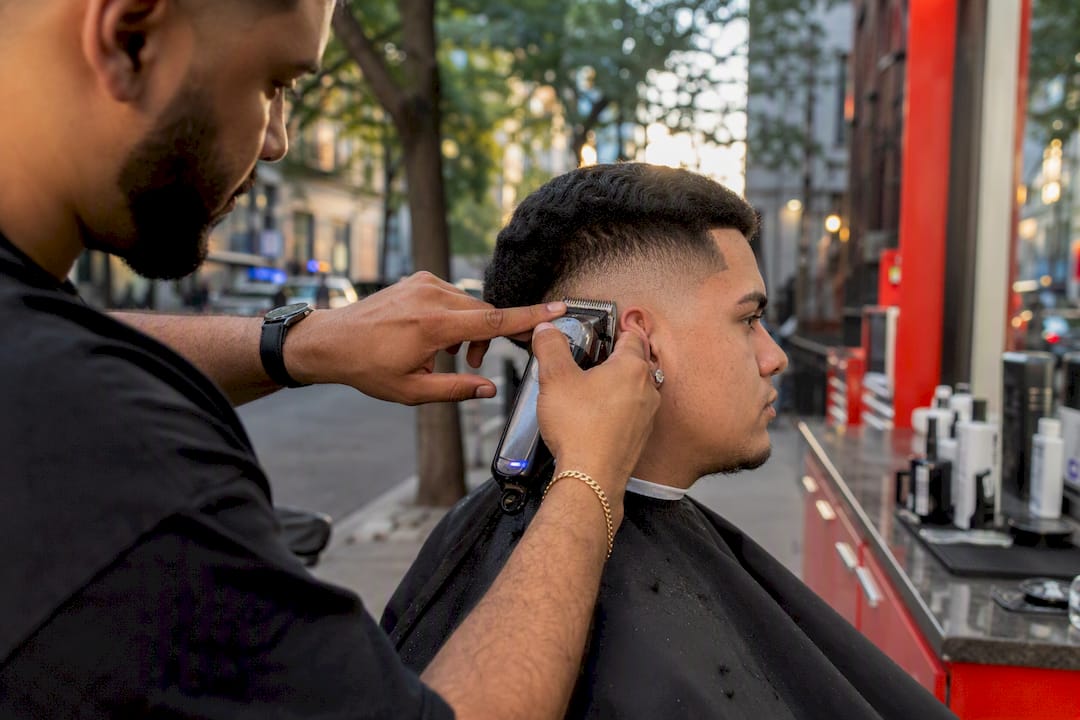
A burst fade is a radial fade that wraps in a semicircular arc around and behind the ear, creating a sunburst-shaped blend while keeping length at the crown and nape. It flatters curly, wavy, and medium-thick hair especially well, and it needs a touch-up every two to four weeks depending on how close the sides are cut. If you want side-profile emphasis without shaving off length everywhere, it’s a strong pick.
A burst fade curves around the ear in a radial, sunburst pattern, creating a dramatic side emphasis and preserving length at the crown and nape.
The contrast level varies from low, subtle fades near the ear, to high, bold lines above the ear, with skin fades requiring the most frequent touch-ups every two to three weeks.
Precision in cutting radial curves, especially around the ear, and clear communication with the barber about fade height, finish, and top length are essential for the desired look.
A burst fade flatter oval, square, and round face shapes best, but high-maintenance styles like skin finishes demand a regular schedule, which may not suit all lifestyles.
Proper styling products and at-home touch-ups can maintain the fade’s sharpness, but the fade’s quality depends heavily on a barber’s skill and attention to radial clipper-over-comb technique.
Table of Contents
What Makes a Burst Fade Different From a Drop or Taper Fade?
The defining feature of a burst fade is where the fade line travels: it curves in a rounded arc that starts behind the ear and fans outward, rather than running in a straight horizontal path around the head. Barbers sometimes call this a “radial fade” or “halo fade” because the shortest point sits directly behind or above the ear, and the length gradually builds outward from there. That semicircular sunburst pattern is what separates it visually from every other fade style.
A drop fade takes a different route. Instead of curving upward and around the ear, it dips downward and back, sloping toward the nape of the neck. The core distinction really is the ear: a burst wraps around it, a drop fade drops below and behind it. That difference changes the whole visual weight of the haircut. A burst fade pulls the eye toward the temple and cheekbone. A drop fade pulls it toward the jaw and neckline.
A taper is simpler still. It’s a gradual shortening of hair at the sides and back with no sharp curve or dramatic contrast point, so it reads as more conservative and office-friendly.
Here’s how the three compare at a glance:
Burst fade: curves around the ear, dramatic side emphasis, preserves crown/nape length
Drop fade: dips behind the ear toward the nape, softer overall silhouette
Taper: gradual, low-contrast shortening with no curved detail
If you’re weighing burst fade vs taper for a job that requires a buttoned-up look, the taper wins on subtlety. If you want a cut that photographs well and holds shape, the burst fade wins on definition.
Which Burst Fade Variation Fits Your Hair and Face?
Burst fades split into a handful of core variants, and the one that suits you depends mostly on how much contrast you want and how often you’re willing to sit in the chair.
Low burst fade. The curve starts low, close to the ear, so the contrast between short and long hair is subtle. This is the safest entry point if you’ve never had a fade before or you work somewhere that frowns on aggressive styling.
Mid burst fade. The most common request. It starts higher than the low version, giving noticeably more definition without going full high-contrast. Most guys land here.
High burst fade. Dramatic, sharp, and unmistakable. The curve starts well above the ear, which reads as bold and current but demands the most upkeep.
Skin or bald burst fade. The fade fades all the way to skin at its shortest point instead of leaving a shadow of stubble. It looks cleaner but grows out faster and needs more frequent visits.
Low: subtle, low maintenance, safe for conservative settings
Mid: balanced contrast, the most versatile choice
High: bold statement, needs the tightest refresh schedule
Skin/bald: sharpest possible line, fastest visible regrowth
Burst fade with mullet and mohawk-style hybrids have become one of the more requested combinations, since the preserved length at the back pairs naturally with longer, textured tops. If that’s the direction you’re leaning, Manhattanbarbershopny’s mohawk service page shows what that pairing looks like finished.
For texture: straight hair shows the radial line cleanest, wavy hair softens it slightly, and curly or coily hair benefits from length left on top to balance the tight sides.
Pro Tip: If you have curly hair, ask your barber to cut the top dry before finalizing the fade line. Curl pattern changes how hair falls, and cutting it wet can leave you with more length than you expected once it dries and springs up.
How Do You Ask Your Barber for a Burst Fade?
Naming the style alone isn’t enough. Barbers hear “burst fade” a dozen different ways in a week, so specificity is what gets you the cut you actually pictured.
State the height first. Say “burst fade, mid” or “burst fade, high” rather than just “burst fade.” This tells your barber exactly where the curve should start.
Specify the finish. Clarify whether you want it to fade to skin or stop at a shadow of stubble. These look completely different once finished.
Give a top length. Something concrete works best, like asking for a mid burst fade with a shadow finish and a textured crop, keeping about two inches on top.
Bring photos of the side and back. A front photo tells your barber almost nothing about a burst fade, since the whole style lives in the arc behind your ear.
Mention any extras up front. If you want a beard blend, a hard part, or a design etched into the fade line, say so before the clippers come out, not halfway through.
Manhattanbarbershopny’s guide on describing your fade to a barber walks through this same phrasing in more detail if you want a script to bring in with you.
How Do Barbers Actually Cut a Burst Fade?
The technique starts with a single reference point: a spot directly behind the ear that becomes the shortest section of the entire cut. From there, the barber works outward in short, curved strokes, building the radial arc rather than a straight line. This is the step most home clippers get wrong, because the instinct is to cut horizontally across the head. A burst fade has no straight lines in it at all.
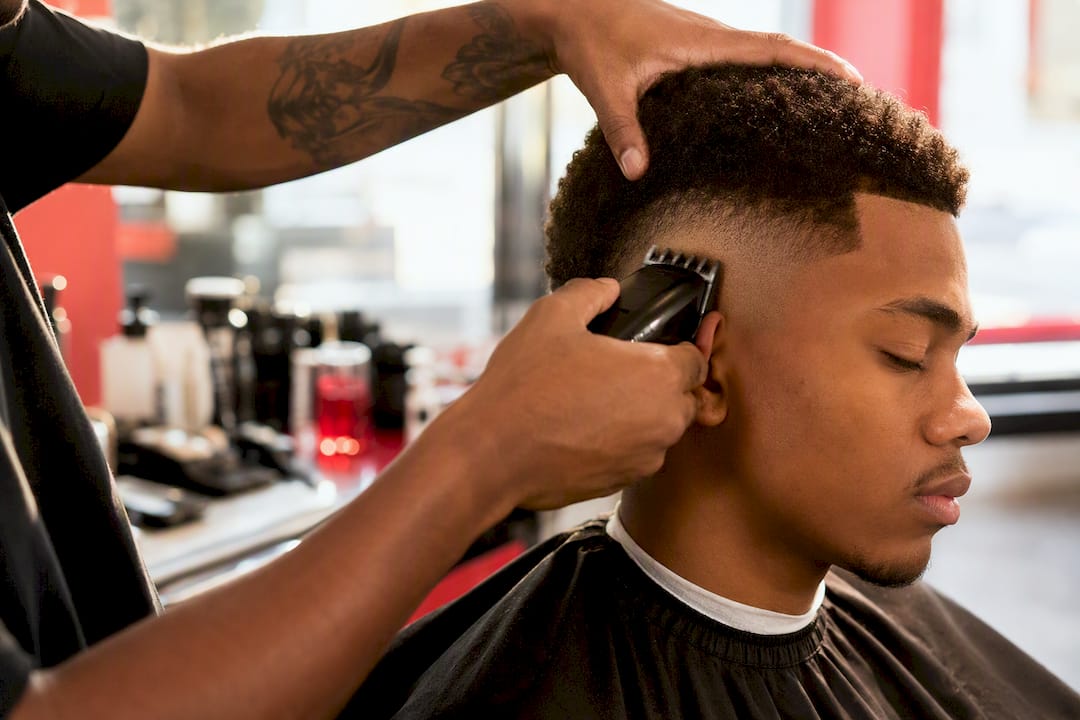
Guard progression follows a standard sequence, moving from the shortest guard near the ear up through one or two longer guards as the clippers travel toward the crown. Once the fade meets the top length, most barbers switch to clipper-over-comb work, since guards alone can’t blend a short fade into longer top hair without leaving a visible line. This is also where wrist control matters most: the pivot around the ear has to stay consistent, or the curve comes out lopsided.
Common mistakes show up in a few predictable spots:
Cutting a straight horizontal baseline instead of a true radial curve
Rushing the crown blend, leaving a visible ring where the fade meets longer hair
Letting clippers run hot, which can nick or irritate skin around the ear
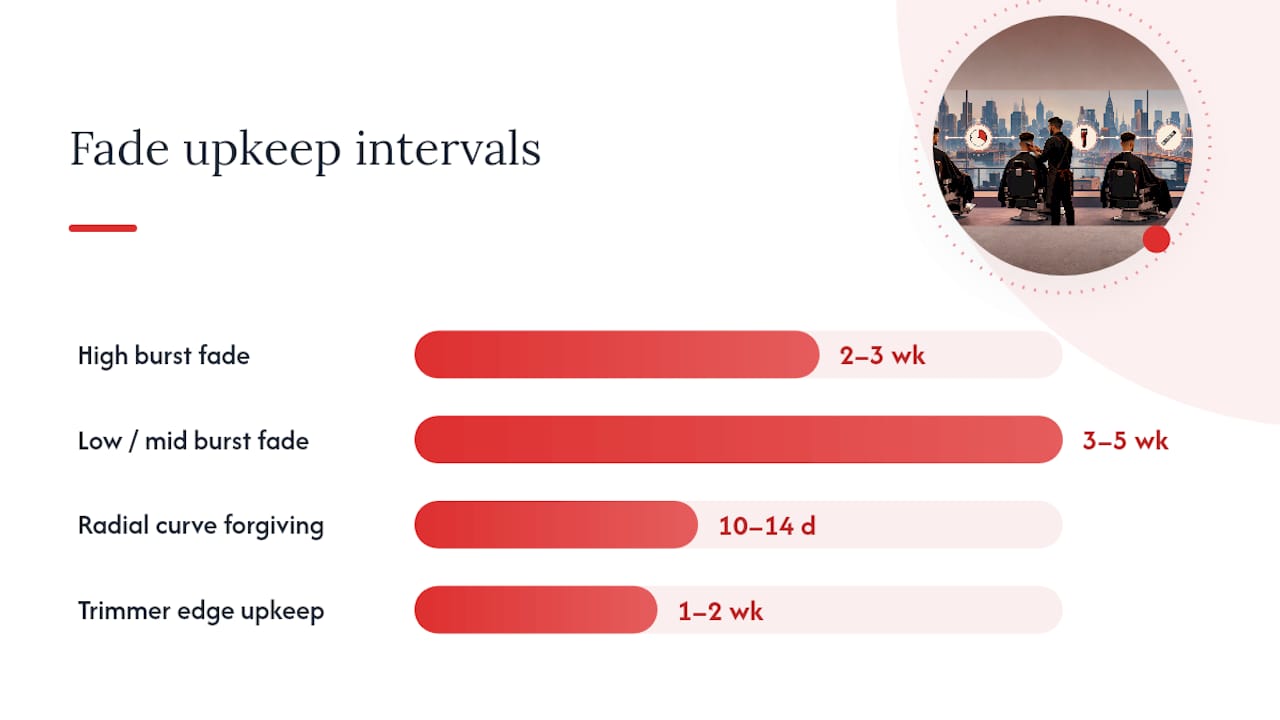
Most professional guides recommend touch-ups every two to three weeks for high-contrast burst fades to keep that curved line crisp, since the tighter the original contrast, the faster regrowth shows.
How Do You Style and Maintain a Burst Fade Between Cuts?
Refresh cadence depends almost entirely on contrast level. High burst fades and anything with an etched design look sharpest maintained every two to three weeks, while low and mid variants can usually stretch to three or five weeks before the line softens noticeably. A radial curve is somewhat more forgiving than a straight line during the first 10 to 14 days of grow-out, but the curved detail still telegraphs regrowth sooner than a simpler drop fade would.
Product choice should match your hair type rather than whatever’s trending:
Matte clay: best for thick or coarse hair that needs texture without shine
Pomade: works for straight or fine hair where you want hold and a bit of sheen
Curl cream: ideal for curly or coily tops, since it defines curl pattern instead of flattening it
Sea-salt spray: good for wavy hair when you want volume and a lived-in texture
At home, keep the sides in check with a trimmer between visits if you notice the fade line blurring, but leave the actual blending to your barber. A trimmer can maintain a clean edge for a week or two; it can’t recreate a radial curve.
Pro Tip: Style your top while it’s slightly damp, not soaking wet. Product distributes more evenly and you’ll get a truer sense of how the cut will look once it dries, rather than fighting water weight all morning.
Is a Burst Fade Right for Your Face Shape and Lifestyle?
Burst fades tend to flatter oval, square, and round face shapes best, since the curved contrast draws attention up toward the cheekbone rather than emphasizing jaw width. Guys with thinner hair density can still pull it off, but the contrast will look less dramatic simply because there’s less volume on top to play against the tight sides.
Lifestyle matters as much as face shape, as shown by many positive customer stories and reviews highlighting varied hair types and styles that work well with different fade techniques. A high burst fade with a skin finish looks incredible for the first ten days and then needs real upkeep to stay that way, which is a real commitment if your schedule doesn’t allow a barber visit every couple of weeks.
Busy schedule, minimal upkeep tolerance: go low or mid, skip the skin finish
Client-facing job with a conservative dress code: consider a taper instead
Want the boldest possible look and don’t mind frequent visits: high burst fade with skin finish
If a burst fade still feels like too much commitment, a drop fade or a straightforward taper gives you fade texture with a far more relaxed maintenance schedule.
How Manhattanbarbershopny Approaches the Burst Fade
Eugene Solod built Manhattanbarbershopny around one idea: a fade should look intentional, not just short. That shows up directly in how a burst fade gets handled here. Before a single clipper guard goes on, the barber looks at your hair’s natural density, curl pattern, and growth direction, because a radial arc that looks sharp on straight hair can look completely different on wavy or coily texture.
That assessment is what decides how tight the curve sits and how much length stays on top. It’s also why the shop leans on craftsmanship over heavy product use, aiming for a fade that holds its shape on its own rather than one that needs constant restyling to look finished. A well-cut radial line should still look clean on day twelve, not just on the day you walk out of the chair.
That’s the standard the shop holds every burst fade to, regardless of hair type walking through the door.
Ready to Get Your Burst Fade Done Right?
A burst fade lives or dies on that curved line behind your ear, and getting it wrong is easy if the barber isn’t confident with radial clipper-over-comb work. Manhattanbarbershopny built its reputation on exactly this kind of precision fade, so you walk out with a shape that holds up for weeks, not just for the walk home.

Whether you’re after a low, mid, or high burst fade, or want to pair it with a mullet or textured crop on top, you can book your appointment online and tell the barber exactly what you read here. First time in the chair? Check out the free model haircut offer to see the craftsmanship for yourself before committing to a regular routine.
Sources
Recommended
Comments